How Does Auto Recycling Work?
A retired car can look like a heap of steel, cracked plastic, and worn rubber. Yet many of its parts still have useful lives. Auto recycling turns that possibility into a careful sequence of inspection, dismantling, and material recovery. The process begins when a vehicle reaches a licensed recycling facility. Staff identify it, check its condition, and prepare it for safe handling. Details matter. A missed fluid leak or overlooked reusable part can affect what happens next.
Circular-design expert William McDonough’s principle, “Waste equals food,” offers a useful lens for understanding the work. In auto recycling, that idea means treating a vehicle as a source of recoverable resources, not simply scrap. Technicians may remove working components such as alternators, mirrors, or doors for testing and resale. Fluids, batteries, tires, and other materials are handled separately. The remaining shell is processed so metals can be sorted and sent for further use.
It is not a flawless loop. Some parts are damaged, some materials are difficult to separate, and recovered components still need careful checks. That deserves attention. A reused part can conserve resources, but buyers should verify its condition and suitability. This article follows a vehicle from arrival through dismantling and material recovery, explaining what happens at each stage and why responsible handling matters. The details can vary between facilities, so a single car may not follow precisely the same route as the next.
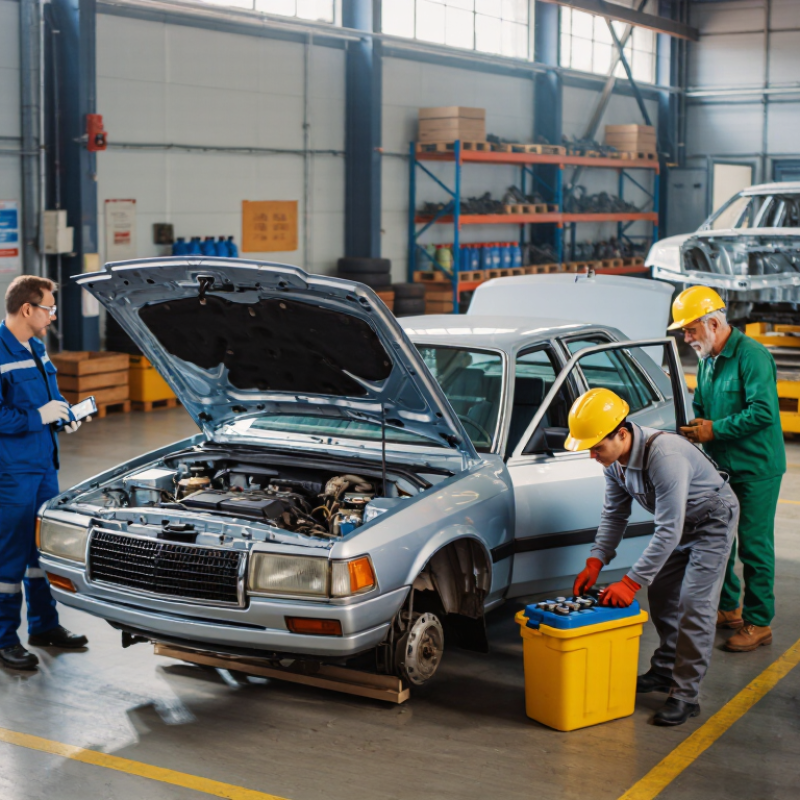
The process begins with a scheduled pickup from a home, repair shop, or storage yard. A trained operator records the vehicle identification number, mileage, visible damage, and available ownership documents. Photos help capture dents, missing parts, and fluid leaks before the vehicle moves. Details matter.
At the receiving site, staff check the vehicle’s condition and identify components that may be reused. They also look for hazards such as a damaged battery, deployed airbags, or leaking fluids. The assessment guides safe handling and helps prevent reusable parts from being overlooked. It is not always exact: hidden damage can change the vehicle’s estimated value after dismantling begins.
A reliable assessment supports better material recovery later. Eurostat’s 2021 end-of-life vehicle statistics reported that the EU achieved an 85.7% reuse and recycling rate by weight. That figure reflects the full treatment chain, not collection alone, but careful intake helps make recovery possible.
Record keeping matters too. Matching vehicle details to its condition reduces mix-ups and gives dismantling teams a clearer starting point.
A quick visual check can miss things. A second review is often worthwhile.
At an auto recycling facility, fluid removal begins before dismantling. Technicians use sealed containers and extraction equipment to drain engine oil, coolant, brake fluid, and fuel. Refrigerant is recovered with dedicated equipment, while batteries and airbag components are separated for safe handling. These steps help prevent leaks during storage and vehicle crushing. Small spills matter. The U.S. Environmental Protection Agency warns that one gallon of used oil can contaminate up to one million gallons of fresh water.
Each fluid has its own route. Used oil, for example, can be collected for re-refining rather than mixed with other waste. The EPA notes that re-refining used oil takes far less energy than producing lubricant from crude oil. Workers also check for damaged hoses, trapped fluid, and components that may be missed on a quick pass. The process is not always tidy: older vehicles can have corroded fittings, and a drain point may not release every last drop. World Steel Association figures indicate that using one tonne of recycled steel can avoid about 1.5 tonnes of CO2 emissions compared with primary steelmaking. Careful depollution supports that recovery by keeping fluids and hazardous components out of the scrap stream.
At an auto recycling facility, dismantling starts with inspection and careful sorting. Technicians identify reusable components, then remove fluids and separate materials. Engines, alternators, doors, and mirrors may be checked, cleaned, and tested before resale. Small parts matter. A clean-looking component can still fail inspection, so testing helps prevent unreliable parts from returning to service.
The Automotive Recyclers Association estimates that about 86% of a vehicle’s material content is recycled, reused, or recovered. Its industry figures also estimate that vehicle recycling recovers around 25 million tons of material each year in the United States. Once usable parts are removed, steel, aluminum, and other materials are sorted for processing. This work saves valuable resources, but the process is not perfectly circular: damaged parts and mixed materials can be difficult to recover.
Tips: Ask how a used part was tested and whether its condition is documented. For home maintenance, do not remove vehicle fluids or dismantle high-voltage components yourself; trained professionals have the right equipment. Recycling depends on careful sorting, and one missed step can reduce what gets recovered.
| Stage | What Happens | Parts and Materials Recovered | Why It Matters |
|---|---|---|---|
| 1. Vehicle inspection | The vehicle is identified, inspected, and assessed for damage, hazardous components, and parts that may be suitable for reuse. | Potentially reusable engines, transmissions, wheels, body panels, lights, and electronic components. | Inspection helps determine a safe dismantling order and prevents damaged or unsuitable parts from being sold for reuse. |
| 2. Depollution | Fluids and hazardous items are removed using suitable equipment. These can include fuel, engine oil, coolant, brake fluid, refrigerant, and the battery. | Lead-acid batteries may be sent to specialist recyclers; drained fluids are stored separately for treatment or recovery. | Keeping hazardous substances out of soil, water, and general scrap reduces environmental and workplace risks. |
| 3. Reusable-parts removal | Technicians remove serviceable components, inspect and test them where appropriate, and prepare accepted parts for resale or reuse. | Examples include alternators, starters, mirrors, seats, doors, wheels, and selected engine or transmission components. | Reusing a functioning part can extend its useful life and reduce demand for a newly manufactured replacement. |
| 4. Material separation | After reusable parts are removed, the remaining vehicle shell is processed, often by shredding. Sorting systems separate material streams by properties such as magnetism, density, and electrical conductivity. | Ferrous metals such as steel and iron, non-ferrous metals such as aluminium and copper, and mixed non-metallic residues. | Separating materials makes it possible to send metal streams to appropriate recycling processes and limits contamination. |
| 5. Recycling and recovery | Recovered metals are sent to processors, where they can be prepared as feedstock for metal production. Other materials are recycled or managed according to local facilities and regulations. | Steel, iron, aluminium, and copper; some glass, plastics, and other materials may also be recovered where suitable recycling routes exist. | The final recovery options depend on material quality, vehicle design, processing technology, and local recycling infrastructure. |
After fluids, batteries, tires, and reusable parts are removed, the remaining vehicle shell is fed into an industrial shredder. Heavy rotating hammers tear the steel body into smaller pieces. The machine is loud, and the fragments can be jagged. Operators control the feed rate to keep material moving steadily and limit equipment wear.
Magnets pull ferrous metals from the mixed stream. Eddy-current separators can then eject many non-ferrous metals, including aluminum. Screens and sensor-based sorting help separate smaller pieces.
The leftover mix, often called automotive shredder residue, may contain plastics, foam, glass, rubber, and fine metal fragments. It is harder to sort than clean steel. A practical quality check is to sample the recovered metal and inspect residue for misplaced valuable material.
Even careful sorting leaves some imperfect fractions; that is worth acknowledging. Dust control and routine equipment checks also matter, because shredding produces airborne particles and puts sustained stress on machinery. EPA end-of-life vehicle guidance provides the recycling estimate; actual recovery varies with vehicle condition and facility equipment.
How Does Auto Recycling Work?
Sorting and Processing Recovered Materials
After reusable parts are removed and fluids are safely drained, the vehicle’s remaining shell is prepared for processing. Large metal pieces may be separated before the shell enters a shredder. The result is a mixed stream of metal fragments, plastic, glass, and other materials. Small details matter. A rubber strip or trapped piece of glass can affect the quality of a recovered batch.
Sorting equipment separates materials by their physical properties. Magnets pull out much of the iron and steel. Eddy-current separators can help separate nonferrous metals, such as aluminum, from other fragments. Screens divide pieces by size, while sensors and workers may identify materials that machines miss. Not every fragment is easy to classify.
Separated metals are usually sent to processors that prepare them for use in new products. Plastics and glass may also be recovered when they are clean enough and suitable facilities are available. A damp or contaminated load can reduce its value, so careful handling matters. Still, sorting is not perfectly neat: some material is lost or remains mixed. That limitation deserves attention.
Vehicles are dismantled and sorted so usable parts and materials can be recovered. EU rules set minimum targets, measured by average vehicle weight, for reuse and recycling, and for reuse and recovery.
Targets: at least 85% reuse and recycling, and at least 95% reuse and recovery by average vehicle weight. Recovery includes recycling and other recovery operations, such as energy recovery. Source: EU End-of-Life Vehicles Directive 2000/53/EC.
Logel’s Auto Parts
116 Bridge St East
Kitchener, Ontario
N2K 1J6
Phone: 519-745-4751
Toll Free: 1-800-818-9118
Hours 8:00-5:00 Monday to Friday
At Logel’s Auto Parts, we serve a range of communities in Southern Ontario, including:
Sign up today for the latest updates from the Logel’s Auto Parts team, including pricing for scrap vehicles, our newest product lines, current operating hours, and much more.