Why Are Automotive Parts So Expensive?
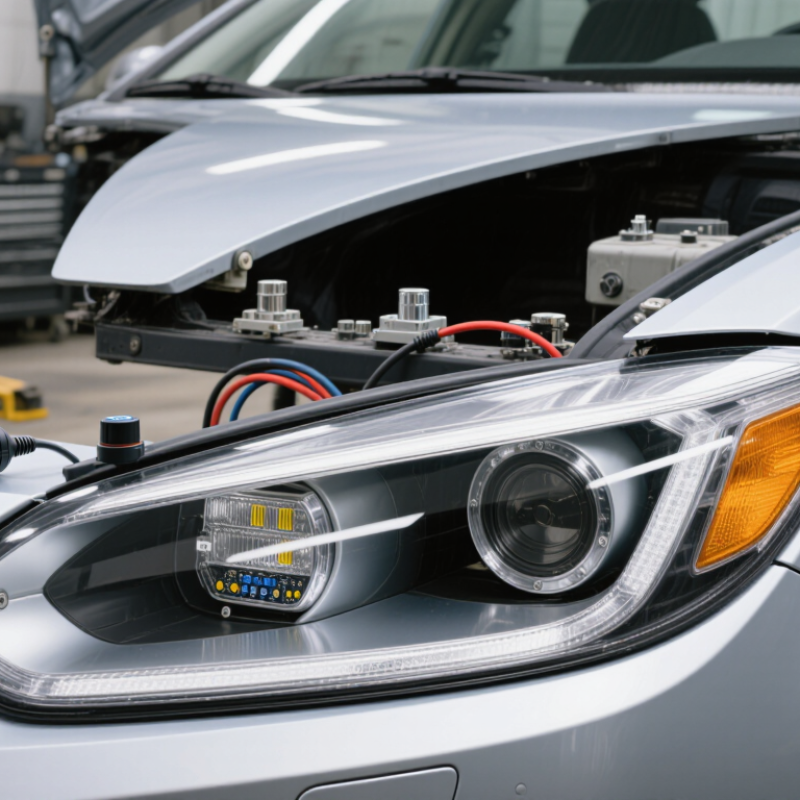
A replacement headlamp can cost hundreds of dollars, even before installation. The price may reflect more than the part itself: vehicle-specific design, electronics, shipping, and the time needed to diagnose a fault. A simple-looking component can contain sensors, wiring, and software connections. That complexity is easy to miss.
The Auto Care Association’s 2024 Joint Channel Forecast estimated the U.S. light-duty automotive aftermarket at about $391 billion in 2023. This figure covers a broad aftermarket, not parts alone, so it should not be treated as a parts-price index. Still, it shows the scale of an industry supplying and servicing a vast, diverse vehicle fleet. AAA’s 2023 Your Driving Costs report also estimated annual maintenance, repair, and tire costs for a new vehicle at roughly $1,200. Real costs vary sharply by model, age, and location.
As Bill Hanvey, president and CEO of the Auto Care Association, has emphasized in discussing the aftermarket, vehicle technology is changing what repair work requires. That is a paraphrase, not a verbatim quotation. The distinction matters: a sensor-equipped bumper may need calibration after replacement, while an older part may be easier to source and fit. Labor and diagnostics can therefore add substantially to the bill. Sometimes the explanation is less satisfying: limited supply or a hard-to-find part can push prices up, too. And not every high price is automatically justified. Comparing quotes and asking what the estimate includes can reveal the difference. These details help explain why automotive parts can feel unexpectedly expensive—and why the sticker price rarely tells the whole story.
Automotive parts include far more than visible items such as tires, mirrors, and headlights. A vehicle also contains engine components, brake assemblies, sensors, wiring, filters, seals, and thousands of small fasteners. Some parts work alone; others depend on precise connections with nearby components. A brake pad, for example, belongs to the braking system, but its fit and performance also depend on the rotor and caliper. Small parts matter.
One practical way to classify parts is by function: powertrain, steering, suspension, electrical, body, safety, and interior. This helps technicians locate problems and identify related components. Parts can also be grouped by how they are supplied. A single replacement component is different from an assembly, which may include several pieces already fitted together. The right choice depends on the fault, vehicle condition, and repair guidance—not simply the part’s name.
Another useful distinction is between new, remanufactured, and used parts. New parts have not been previously installed; remanufactured parts are restored and tested, though standards can vary. Used parts may be suitable for some repairs, but their history is not always clear. Classification is helpful, yet real repair decisions are rarely tidy. A sensor fault, for instance, may come from the sensor, damaged wiring, or a loose connector. Careful inspection matters more than guessing from a label.
Why Are Automotive Parts So Expensive?
A vehicle part must do more than fit its space. It may face repeated vibration, heat, moisture, and sudden loads while working beside other tightly packed components. Engineers set requirements for strength, weight, noise, and service life before production begins. Meeting several at once can call for specialized materials and complex shapes.
Small errors matter. A mounting bracket, for example, may need precisely placed holes so it aligns with nearby parts on an assembly line. Producing that shape can require custom tooling, multiple forming steps, and checks with measurement equipment. A tighter tolerance often means slower machining or more parts rejected during inspection. But strict tolerances are not always necessary everywhere; that balance can be harder to get right than a drawing suggests.
Production choices also shape the final price. A part made in modest quantities may have to carry the cost of designing and building its tooling across fewer units. A molded component might need a durable mold, while a machined metal piece can involve several operations and careful finishing. Material prices matter, too, but they are only one part of the bill. In practice, a small change in geometry can sometimes reduce manufacturing steps, though redesigning a proven component takes time and testing. The cheapest part to produce is not automatically the least costly choice if it wears quickly or is difficult to install.
A replacement part rarely travels straight from a factory to a repair bay. It may pass through an import terminal, a regional warehouse, and a local distributor before reaching a technician. Each step requires storage, handling, inventory software, and staff. A sensor sitting on a shelf still costs money, even when demand is unpredictable. Small orders can also mean higher per-part shipping costs. Every handoff adds friction.
That network serves a large market. The Auto Care Association’s 2024 Factbook estimated U.S. automotive aftermarket sales at about $391 billion in 2023. Wide demand requires distributors to stock many part types, including slow-moving items, so customers can get the right fit quickly. Global shipping shocks can make that inventory more expensive: the Federal Reserve Bank of New York’s Global Supply Chain Pressure Index peaked at 4.3 standard deviations above its historical average in December 2021. Those pressures do not explain every price increase. One weakness in this picture: invoices rarely show each storage or shipping cost separately. A part’s price can reflect a costly chain, but the exact share is hard to see.
Common cost drivers from production through delivery to the customer
| Supply-chain stage | What adds to the cost | Typical operational detail | How it can affect the final price |
|---|---|---|---|
| Raw materials | Steel, aluminum, copper, rubber, plastics, and electronic components must be sourced and processed. | Material requirements vary substantially by part; a sensor, brake rotor, and body panel use different inputs. | Commodity-price changes and material-intensive designs can raise production costs. |
| Manufacturing and quality control | Production equipment, skilled labor, tooling, testing, and defect prevention are built into the part’s cost. | Precision parts and safety-related components may require tighter tolerances and additional inspection. | Specialized processes and lower production volumes generally mean higher cost per unit. |
| International freight | Transport, fuel, cargo handling, insurance, and customs processing add expense when parts cross borders. | Ocean shipping often takes several weeks port to port; air freight is much faster but typically costs more. | Urgent shipments, fuel-price increases, port congestion, or low-volume freight can increase landed cost. |
| Import duties and compliance | Applicable duties, documentation, product testing, and regulatory requirements may add costs. | Duty rates depend on factors such as the part’s tariff classification, origin, and destination market. | The effect is product- and route-specific; there is no single duty rate for all automotive parts. |
| Warehousing and inventory | Storage space, handling, insurance, inventory systems, and the cost of money tied up in stock. | Suppliers and sellers may stock parts in multiple locations to support availability across a wide vehicle fleet. | Slow-moving or bulky parts can cost more to store and keep available. |
| Wholesale distribution | Distributors coordinate purchasing, storage, order processing, and delivery to repair businesses and retailers. | A part may pass through one or more distribution layers before reaching the end customer. | Each layer has operating costs and a margin, which can increase the price paid by the next buyer. |
| Retail and repair-channel costs | Customer service, storefront or website operations, local delivery, payment processing, and returns handling. | The final channel may sell the part directly or as part of a repair service. | Service, convenience, and delivery requirements contribute to the customer-facing price. |
| Returns, warranty, and fitment risk | Reverse shipping, inspection, replacement handling, warranty support, and incorrect-fit returns. | Compatibility can depend on vehicle model, year, engine, trim, and production variation. | Parts with more fitment complexity can require additional cataloging and after-sale support. |
Note: These are general supply-chain cost drivers, not fixed price shares. Actual costs vary by part, production volume, country of origin, shipping route, inventory strategy, and sales channel.
Automotive parts prices reflect more than the metal or plastic in a box. Brand positioning matters: a vehicle maker’s original part may include exact-fit design, testing, and distribution costs, while aftermarket alternatives vary in materials and warranty coverage. Compatibility adds another layer. A sensor can look identical yet require different software, connectors, or calibration for a specific model year. That precision has a cost. It can also prevent costly fitment mistakes, though not every premium part is automatically better.
Availability can push prices up quickly. A common filter may sit on a local shelf; a model-specific headlamp may need to cross an ocean, wait for production, and travel through several warehouses. S&P Global Mobility reported that the average age of U.S. light vehicles reached 12.6 years in 2024, extending demand for replacement parts across older, varied vehicles. This helps explain why uncommon components can be expensive even when their design seems simple. Still, age alone does not prove a part is scarce. That distinction matters.
Tips: Match the part by VIN, model year, and trim, then compare warranty and delivery time—not just the listed price. Ask whether calibration or extra hardware is required. The cheapest option can become the costly one.
Sources: S&P Global Mobility, “Average Age of Vehicles in the U.S. Hits Record 12.6 Years,” 2024; Auto Care Association, 2024 Factbook.
Repair bills vary because vehicles are built with different parts, layouts, and technology. A bumper may look simple, yet it can hold sensors that need careful removal and recalibration. Some components are widely available; others are vehicle-specific or must be ordered from limited suppliers. Labor time differs, too. A cramped engine bay can turn a small replacement into hours of work.
The CCC Intelligent Solutions 2024 Crash Course reported average U.S. repairable-claim severity of $4,721 in 2023, up 3.7% from 2022. That figure is an average, not a price list. A cracked lamp on one vehicle may be a straightforward swap; on another, it may involve adaptive lighting, programming, and alignment. It adds up. Repair estimates can also differ because shops use different labor rates and parts options.
The American Automobile Association’s 2024 Your Driving Costs report estimated average annual maintenance, repair, and tire costs at $1,186 for a new vehicle. That category covers more than replacement parts, so it cannot predict one repair. Still, it shows why ownership costs are broader than the price printed on a component. Small differences matter. I would treat any broad average as a starting point, then ask for an itemized estimate showing parts, labor, and required calibration.
Logel’s Auto Parts
116 Bridge St East
Kitchener, Ontario
N2K 1J6
Phone: 519-745-4751
Toll Free: 1-800-818-9118
Hours 8:00-5:00 Monday to Friday
At Logel’s Auto Parts, we serve a range of communities in Southern Ontario, including:
Sign up today for the latest updates from the Logel’s Auto Parts team, including pricing for scrap vehicles, our newest product lines, current operating hours, and much more.