A parts car is a vehicle purchased mainly for usable components, not for everyday driving. It may be damaged, incomplete, rusty, or mechanically neglected. Yet its engine, transmission, glass, trim, wiring, seats, or control modules may support another vehicle’s repair.
The term is not always precise. Some sellers use it for a complete project car, while others mean a vehicle suitable only for dismantling. That difference matters. International buyers must inspect photographs, verify the VIN, confirm ownership documents, and request a detailed parts inventory before paying. A cheap vehicle can become expensive after storage, port handling, inland transport, customs duties, and environmental fees. Batteries, fluids, airbags, and refrigerants may also require regulated handling.
Automotive historian and barn-find expert Tom Cotter describes the practical value clearly: “A parts car can save a restoration when the right component is impossible to find.” His point reflects real workshop experience. One rare dashboard or original trim piece can justify an otherwise unattractive purchase. Sometimes.
Global sourcing also requires restraint. Buyers should compare part numbers, production years, left-hand or right-hand drive specifications, and regional equipment differences. A matching model does not guarantee compatibility. I have seen buyers focus on the vehicle price and overlook missing paperwork. That is a costly mistake. Reliable sourcing depends on transparent sellers, condition evidence, lawful export procedures, and realistic repair goals. A parts car is not merely a wreck. It is a calculated source of components, with uncertainty built into every decision.
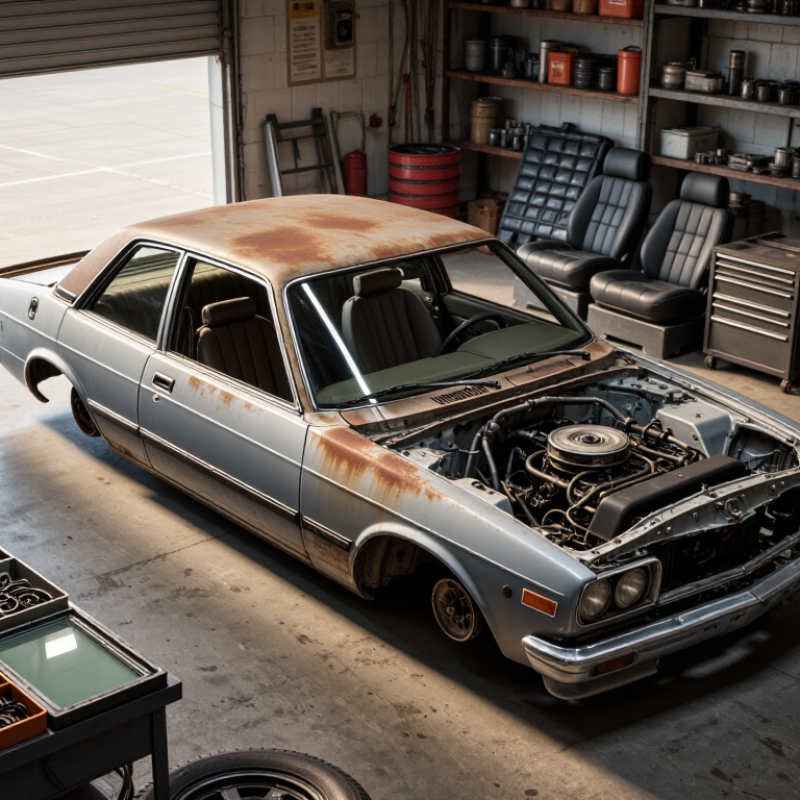
A parts car is a vehicle purchased mainly for usable components, not regular driving. It may have a damaged body, failed engine, or expired registration, while its doors, seats, lights, gearbox, or control modules remain valuable. Condition matters more than appearance. A muddy interior can hide a clean wiring harness.
S&P Global Mobility reported that the average U.S. light-duty vehicle age reached 12.6 years in 2024. Older vehicles create steady demand for affordable replacement parts. However, a parts car is not automatically cheap. Buyers should inspect the engine code, mileage evidence, structural damage, corrosion, and compatibility before payment. Photographs help, but they often miss cracked connectors and water damage. I have found that incomplete records create more risk than visible dents.
Global buyers should request a detailed inventory, clear ownership documents, and export-ready transport information. The European Commission’s end-of-life vehicle framework targets at least 85% reuse and recycling by weight, with 95% recovery. That supports careful dismantling and responsible material handling. Buyers should also verify customs rules, restricted materials, and local recycling requirements before shipping. One overlooked fee can erase the saving. A practical comparison should include purchase price, inspection, dismantling, freight, duties, storage, and disposal costs. Sometimes, buying one good component is wiser than importing an entire vehicle.
A vehicle becomes a parts car when repairing it costs more than its realistic market value. Collision damage is the most common trigger. In 2023, CCC Intelligent Solutions reported a total-loss frequency of 27.5% for U.S. auto claims. Rising labor rates, advanced sensors, and structural inspections can quickly push a damaged vehicle beyond economical repair.
Some causes are less visible. Flood exposure can corrode wiring beneath carpets and inside connectors. Fire can weaken plastics, seals, and electrical systems. Hail may damage hundreds of panels without affecting the engine. Theft-recovered vehicles can also become parts cars when interior damage, missing modules, or tampered wiring makes restoration uneconomical. These vehicles may look complete from a distance.
Age matters too. S&P Global Mobility reported that the average U.S. light vehicle reached 12.6 years in 2024. Older cars often face scarce trim pieces, discontinued control units, and expensive labor. A low-speed crash can therefore end a vehicle’s road life. The usable parts may still have substantial value.
This is where judgment becomes difficult. A damaged car is not automatically a poor donor. Its engine, transmission, doors, lamps, wheels, or electronic modules may remain serviceable. However, photographs can hide corrosion, frame movement, and water intrusion. Global buyers should request a condition report, verify the vehicle identity, review title status, and confirm export requirements before purchase. Industry reports provide useful averages, but one inspection can reveal the uncomfortable truth: the cheapest parts car may not be the cheapest source.
A parts car is a vehicle purchased mainly for usable components rather than everyday driving. Global buyers often source one when replacement parts are expensive, discontinued, or difficult to locate. The vehicle should have clear ownership records and a traceable identification number. Condition matters. A damaged exterior does not always mean the engine or interior is unusable.
Recoverable components may include the engine, transmission, alternator, starter motor, radiator, suspension arms, wheels, seats, mirrors, doors, lights, and dashboard controls. Electronic modules can also be valuable, but compatibility requires careful checking. Match production year, engine type, connector design, and software requirements. Measure twice.
Safety-related parts need stricter judgment. Seat belts, airbags, braking components, and steering parts may look intact after a collision but contain hidden damage. I would not reuse them without qualified inspection and manufacturer-approved procedures. A cheap component is not a bargain if it creates a safety risk.
Experienced dismantlers usually label removed parts, record mileage when available, and test electrical components before shipment. Buyers should request detailed photographs, testing notes, dimensions, and export documents. Shipping regulations may restrict fluids, batteries, or hazardous materials. Customs rules also vary by destination.
It is not always economical. Storage fees, taxes, compatibility errors, and return shipping can change the final cost. Even careful inspections miss something occasionally, so a written warranty and realistic return terms provide valuable protection.
A parts car should be evaluated as an inventory source, not merely a damaged vehicle. Global buyers need clear photographs of the engine bay, cabin, underbody, and identification plate. Ask for close images of connectors, wiring, suspension mounts, and storage areas. Small details often reveal moisture damage or missing components.
Verify the vehicle identification number, ownership documents, auction records, and export eligibility before making an offer. The seller should provide an accurate parts list and disclose flood exposure, fire damage, corrosion, and previous dismantling. Compare the listed mileage with pedal wear, seat condition, and service records. Mileage alone proves very little.
Inspect compatibility carefully. Check the engine code, transmission type, production year, body configuration, and regional specifications. A matching model may still contain incompatible electronics or safety equipment. Request a cold-start video when the powertrain is available. Ask whether the vehicle rolls, steers, and loads safely. It sounds basic.
Calculate the complete landed cost, including purchase, inspection, storage, freight, taxes, and recycling fees. Use an independent inspector when the vehicle is distant. One overlooked shipping charge can erase the value of several usable parts. Clean photos can mislead, and even experienced buyers miss hidden corrosion. I would rather reject a promising car than trust incomplete evidence.
Practical sourcing and evaluation framework for international buyers
| Evaluation Dimension | What a Parts Car Is / What to Check | Reliable Evidence or Data Point | Buyer Assessment | Risk Level |
|---|---|---|---|---|
| Basic Definition | A complete or incomplete vehicle purchased mainly to recover usable parts rather than to return the vehicle to normal road use. | Seller description, dismantling photos, vehicle condition report, and intended-use statement. | Confirm that the vehicle is being evaluated for components, not simply marketed as a low-cost repair project. | Medium |
| Vehicle Identity | The exact vehicle specification must be identified because parts can differ by model year, engine, transmission, body style, and market. | VIN or chassis number, model year, engine code, transmission type, body style, and production date. | Match the identity information across the vehicle, documents, photos, and parts inventory. | High |
| Legal Status and Ownership | The vehicle must be legally transferable, exportable, and eligible for dismantling or parts recovery in the source jurisdiction. | Title or registration document, bill of sale, lien release where applicable, export declaration, and customs paperwork. | Reject transactions with unclear ownership, unresolved liens, altered identification, or missing export documents. | High |
| Source Channel | Common sources include salvage auctions, dismantlers, recycling yards, fleet disposals, repair shops, insurers, and private sellers. | Seller registration details, physical address, transaction history, inspection policy, and written terms. | Prefer sources that provide traceable documentation, detailed photographs, and a defined dispute process. | Medium |
| Damage Pattern | Collision, flood, fire, hail, vandalism, mechanical failure, and age-related deterioration affect different parts in different ways. | High-resolution photos from multiple angles, underbody images, fluid contamination evidence, and a professional inspection report. | For electronic or safety-critical components, avoid vehicles with fire or flood exposure unless testing is documented. | High |
| Parts Completeness | A vehicle can be sold as a shell, rolling chassis, complete vehicle, or partially dismantled unit; the included components must be defined. | Itemized parts list, removal status, photographs, and quantity confirmation for high-value assemblies. | Compare the included parts with the buyer’s required list before calculating the purchase price. | Medium |
| Mechanical Condition | The engine, transmission, axles, steering, suspension, and cooling system may have salvage value even when the vehicle is not roadworthy. | Compression or leak-down results, engine rotation test, diagnostic scan, fluid condition, and cold-start video when available. | Treat untested assemblies as cores or uncertain inventory rather than confirmed working parts. | Medium |
| Electrical and Electronic Parts | Control modules, sensors, wiring, displays, and electric-drive components can be sensitive to moisture, impact, incorrect handling, and battery damage. | Diagnostic scan, power-on test, fault-code record, insulation test where relevant, and moisture inspection. | Request test results and packaging requirements before assigning resale value. | High |
| Mileage and Service History | Mileage is useful for estimating wear but does not prove the condition of individual components, especially after severe damage. | Odometer photo, maintenance records, inspection history, and consistency between instrument readings and vehicle records. | Use mileage as supporting evidence, not as a substitute for component-level testing. | Low–Medium |
| Compatibility and Interchangeability | A visually similar part may not fit or function because of production changes, regional specifications, software configuration, or different connectors. | Part number, casting number, connector layout, dimensions, technical catalog, and application-year verification. | Verify compatibility with the receiving vehicle before purchase; do not rely on photographs alone. | High |
| Export, Customs, and Import Rules | Whole vehicles, used parts, batteries, refrigerants, fluids, airbags, and hazardous materials may have different transport and import requirements. | Commodity classification, commercial invoice, packing list, country-of-origin information, transport declaration, and destination-country rules. | Confirm requirements with customs and the freight provider before payment or dismantling. | High |
| Shipping and Packaging | Shipping may involve a whole vehicle, palletized parts, crates, or consolidated freight. Weight, dimensions, and handling requirements affect cost. | Verified dimensions and weight, packing method, loading photos, freight quotation, insurance terms, and destination charges. | Calculate the landed cost, including inland transport, port charges, duties, taxes, storage, and handling fees. | Medium |
| Price and Economic Viability | The purchase should be based on the expected recoverable value of usable parts, minus all acquisition, testing, repair, storage, and disposal costs. | Itemized cost model, recent comparable prices, estimated recovery rate, and conservative resale assumptions. | Proceed only when the estimated margin remains positive after transport, customs, failures, and unsold inventory are included. | Medium |
| Inspection and Final Decision | An independent inspection reduces the risk of misidentified, missing, damaged, contaminated, or non-functioning parts. | Signed inspection report, timestamped photographs, video evidence, serial or part-number record, and agreed acceptance criteria. | Use a written purchase contract covering condition, included parts, documentation, inspection rights, and remedies for material discrepancies. | High |
A parts car is usually a damaged, incomplete, or non-running vehicle bought for usable components. Global buyers should begin with a verified vehicle identification number, ownership record, and clear photographs of the engine bay, suspension, and interior. Ask whether the vehicle can be legally exported, dismantled, and imported in the destination country. Rules differ widely, and a cheap purchase can become expensive after inspection, storage, and port charges.
Shipping by sea is normally more practical for heavy components or an entire donor vehicle. UNCTAD’s Review of Maritime Transport reports that more than 80% of global merchandise trade by volume moves by sea. Buyers should compare container, roll-on/roll-off, and consolidated cargo options. Request a written quotation covering inland transport, export handling, ocean freight, insurance, destination fees, and customs brokerage. The World Bank’s 2023 Logistics Performance Index evaluates 139 economies and highlights customs, tracking, and delivery timeliness. These factors matter more than the lowest freight rate.
Tips: Use a licensed customs broker before payment. Confirm the declared value and tariff code. Photograph every packed component. Use moisture protection for electronics and engines. Keep invoices, serial numbers, and inspection notes together. A spreadsheet helps, but it can still miss storage deadlines or port demurrage. I would allow a contingency budget of 15–25%, because damage, documentation corrections, and inspection delays are common. Never assume the seller’s shipping estimate includes destination charges.
International buyers should allow time for vehicle identification, title and export-document verification, inland transport, ocean booking, loading, customs clearance, and final delivery. The ranges shown are practical planning estimates in calendar days; actual timing depends on the origin country, destination port, shipping method, documentation quality, congestion, and customs requirements.
Logel’s Auto Parts
116 Bridge St East
Kitchener, Ontario
N2K 1J6
Phone: 519-745-4751
Toll Free: 1-800-818-9118
Hours 8:00-5:00 Monday to Friday
At Logel’s Auto Parts, we serve a range of communities in Southern Ontario, including:
Sign up today for the latest updates from the Logel’s Auto Parts team, including pricing for scrap vehicles, our newest product lines, current operating hours, and much more.