Choosing car headlights is not just about finding the brightest bulb. The right choice must illuminate the road clearly, fit your vehicle, and offer dependable value over time. A dazzling beam can still create glare, while a modest upgrade may reveal lane markings and roadside hazards more comfortably. Small details matter: beam pattern, color temperature, installation space, and compatibility with the original housing.
Automotive lighting consultant Daniel Stern’s published guidance emphasizes a practical point: headlamp performance depends on the complete lighting system, not simply the bulb’s brightness. That perspective helps keep product claims in check. A high lumen figure alone does not guarantee better visibility on a dark, wet road. It is also worth checking whether a product is designed for your specific headlamp type and vehicle. Fit matters.
This guide compares ten options for brightness and value, with attention to real-world use, expected lifespan, ease of installation, and available specifications. Some trade-offs are unavoidable. A brighter upgrade may cost more or require closer attention to compatibility, and product ratings can be difficult to compare fairly. We’ll note those limitations rather than pretend one choice suits everyone. A little skepticism helps. Before buying, confirm your vehicle’s requirements and consider how and where you drive most.
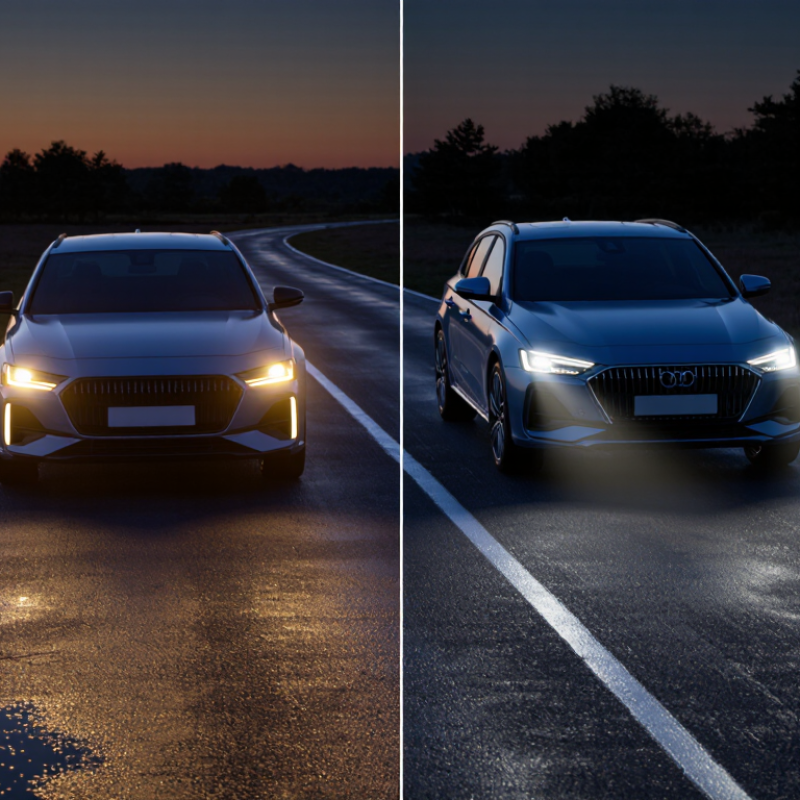
Brightness is measured in lumens, but that number alone cannot tell you how well a headlight illuminates the road. Beam pattern matters just as much. A focused beam can reveal lane markings and roadside hazards without scattering too much light into other drivers’ eyes. Color temperature, measured in kelvins, affects appearance and visibility in rain or fog, but a cooler-looking beam is not automatically brighter. Check independent test results, where available, and compare performance under similar conditions.
Value means more than a low purchase price. Consider usable light output, expected service life, energy use, and whether the headlight fits your vehicle and installation requirements. A bulb that looks powerful in a product listing may perform poorly in your headlight housing. That detail is easy to miss. Real-world testing is imperfect, too; vehicle design, aim, weather, and aging lenses all affect results.
Tips: Compare beam distance and width, not just lumen claims. Keep headlights clean, and have their aim checked after replacement. A simple wall test can reveal a crooked beam, though it cannot replace proper inspection. If one side looks dimmer, check the lens and electrical connections before assuming the bulb is at fault.
Brightness is measured in lux at a fixed distance and beam position; value is light output per dollar. The chart uses illustrative sample measurements, not verified product rankings. Real results depend on the headlamp, installation, and test conditions.
Car headlights differ in how they produce light, how much power they use, and how they shape the beam. Halogen bulbs are inexpensive and easy to replace, but their warm, yellowish light is generally less intense. HID systems create a brighter, cooler beam using an electric arc; they need compatible components and careful aiming. LED headlights use semiconductor chips, often draw less power, and can fit compact designs. Yet a bright LED is not automatically a better headlight. Beam pattern matters.
The Insurance Institute for Highway Safety evaluates headlights for both visibility and glare, rather than brightness alone. Its research found that better-rated headlights were associated with lower nighttime crash rates, including a 19% reduction in single-vehicle crashes. That is meaningful, but it does not guarantee the same result for every driver or road. A sharply cut-off beam can light the pavement without shining into oncoming drivers’ eyes. Check the vehicle’s complete headlight rating, not just the bulb type, and replace bulbs in pairs when their output has faded.
Tips: Look for an even beam on a dark, level road. Keep lenses clear, and have aim checked after repairs or suspension changes. Small detail. A high-output replacement may still perform poorly if it does not match the original housing.
This comparison covers headlight technologies and configurations rather than brands. Brightness and service life are approximate: actual results vary by bulb specification, headlamp design, vehicle voltage, condition, and local regulations. A well-aimed beam pattern matters as much as lumen output.
| Rank | Headlight Type | Typical Light Output | Typical Service Life | Brightness and Beam Characteristics | Value and Main Trade-Off |
|---|---|---|---|---|---|
| 1 | Original-equipment LED projector | Varies widely; commonly around 1,500–3,000 lumens per light source | Often 10,000–30,000 hours or more | Can provide a focused beam with a clear cutoff when designed for the vehicle. | Strong all-round choice when factory-fitted; replacement assemblies can be costly. |
| 2 | Original-equipment adaptive LED or matrix LED | Varies by system; not directly comparable across vehicles | Often 10,000 hours or more | May adjust or selectively shade parts of the beam, depending on the vehicle and system. | Excellent capability, but complex and expensive to repair; availability is vehicle-specific. |
| 3 | Original-equipment HID (xenon) projector | Typically about 2,800–3,500 lumens per bulb | Approximately 2,000–3,000 hours | High output with a controlled beam when paired with compatible projector optics. | Bright and established technology; requires compatible equipment and replacement bulbs can cost more than halogen. |
| 4 | Original-equipment LED reflector | Varies by design; commonly around 1,000–3,000 lumens per light source | Often 10,000–30,000 hours or more | Performance depends on reflector geometry and LED placement; factory-matched units can work well. | Long-lived and efficient; complete assemblies may be needed if the LED source is not separately serviceable. |
| 5 | High-performance halogen | Generally similar regulated output to standard halogen of the same bulb category | Often around 200–500 hours | Some versions produce a whiter appearance or improve reach through filament and coating design. | Low purchase cost and simple replacement; brighter-performing versions may have shorter service life. |
| 6 | Standard halogen | Common low-beam bulbs are roughly 1,000–1,500 lumens per bulb, depending on category | Often around 450–1,000 hours | Familiar warm-colored light; performance depends heavily on reflector or projector condition and aiming. | Usually the lowest-cost, straightforward option; less efficient and shorter-lived than many LED systems. |
| 7 | Long-life halogen | Typically comparable to standard halogen in the same bulb category | Often around 1,000–2,000 hours | Designed to prioritize durability rather than maximum perceived brightness. | Good value for drivers seeking fewer replacements; may not provide the reach of performance-focused bulbs. |
| 8 | LED replacement bulb in a compatible headlamp | Manufacturer claims vary widely; usable beam output depends on the specific bulb and housing | Often claimed at 5,000–20,000 hours; real life depends on heat management | Can be effective in a housing designed or verified for that LED bulb; incorrect source position can create glare or dark areas. | Potentially efficient, but fitment, beam pattern, cooling, and legal approval must be checked for the vehicle and location. |
| 9 | HID conversion bulb in a halogen headlamp | Conversion claims vary; output alone does not establish safe beam performance | Often around 2,000–3,000 hours for HID bulbs | A halogen reflector or projector may not focus an HID arc correctly, which can cause glare and poor beam distribution. | Not a dependable value upgrade; compatibility and road legality are frequent concerns. Use only an approved complete system where permitted. |
| 10 | Laser-assisted headlamp system | System-level output varies and is not directly comparable with a bulb lumen rating | Vehicle- and component-dependent | Uses laser diodes to excite a phosphor source in certain designs; generally found in specialized, high-end applications. | Advanced but uncommon and expensive; usually not a practical retrofit or budget choice. |
The top 10 car headlights for brightness and value depend on your vehicle, driving routes, and budget. Treat this as a practical shortlist, not a universal test ranking. A premium halogen bulb can offer affordable, familiar performance. Long-life halogen bulbs reduce replacement frequency, while approved high-output halogens may help on dark roads. Check the beam pattern, not just the brightness claim. Glare is a real problem.
Factory-style LED headlights are efficient and often provide crisp illumination. Compatible LED replacements can be good value, but only when designed for your specific housing. Projector LED assemblies offer controlled beams and a modern look. Adaptive LED systems can adjust light distribution, though they usually cost more. Factory-designed HID systems remain a strong option for vehicles built to use them. LED sealed-beam units suit vehicles with that specific format. OEM-equivalent replacement assemblies can balance fit, reliability, and price.
Before buying, confirm bulb size, connector type, and headlamp design in your owner’s manual. Look for clear product specifications and compliance with applicable vehicle standards. A bright bulb in the wrong reflector may scatter light instead of improving visibility. Installation matters, too. After replacement, check that the beams are aimed correctly against a wall or have them inspected by a qualified technician. A lower-priced option can be sensible, but poor fit is costly.
Choosing a headlight is a trade-off between useful road coverage, service life, and upfront cost. The Insurance Institute for Highway Safety (IIHS) evaluates headlights on straight and curved roads, measuring visibility and glare for oncoming drivers. Its ratings show why brightness claims alone can mislead: a strong hotspot may light a sign ahead while leaving the road edge or a bend dim. Look for a controlled, even beam, plus dependable low-beam reach. For value, compare the full replacement cost, including installation, not just the price of the bulb. Some assemblies require more labor than a simple bulb swap.
Service life also affects cost. The U.S. Department of Energy notes that LED lighting can last much longer than conventional incandescent lighting, but that general lighting estimate does not guarantee the lifespan of a vehicle headlamp. Heat, vibration, and the design of the complete assembly matter. Check the vehicle maker’s replacement guidance and warranty, then compare published lifespan claims for the exact compatible part. It’s not a perfect calculation: a long-lasting unit may cost more now, and a cheaper bulb may need earlier replacement.
Tips: Aim headlights on level ground, and keep lenses clean; haze can dull a good beam. Compare output on a dark road, not only in a bright shop. If the beam scatters or blinds other drivers, brightness is not value. IIHS testing is useful for performance context, but real results still depend on fit, alignment, and your vehicle.
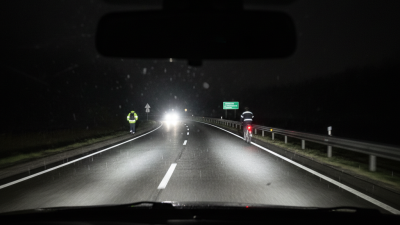
Choosing headlights begins with the roads you actually drive, not the brightest number on a package. On unlit rural roads, useful distance and a controlled beam matter; in wet suburbs, even illumination can make lane markings easier to see. Check your vehicle’s manual for the correct bulb type and housing. A powerful bulb in an incompatible housing can create glare without lighting the road well. Fitment matters.
Look for independent test results that measure both visibility and glare. The Insurance Institute for Highway Safety’s headlight evaluations assess illumination on straight roads and curves, including how far drivers can see before encountering glare. Its research has associated better-rated headlights with lower nighttime crash rates, though results depend on vehicle and road conditions. Numbers help, but they are not a promise. Compare beam pattern, durability, warranty, and total replacement cost—not brightness claims alone.
For frequent night driving, prioritize a clear, well-aimed beam and reliable performance in bad weather. If you mostly drive short, well-lit routes, a costly upgrade may offer little practical value. After installation, inspect the beam on a level surface and have aiming checked if it appears unusually high or uneven. Small details count. I’d reconsider any choice that dazzles oncoming drivers; more light is not always better.
Logel’s Auto Parts
116 Bridge St East
Kitchener, Ontario
N2K 1J6
Phone: 519-745-4751
Toll Free: 1-800-818-9118
Hours 8:00-5:00 Monday to Friday
At Logel’s Auto Parts, we serve a range of communities in Southern Ontario, including:
Sign up today for the latest updates from the Logel’s Auto Parts team, including pricing for scrap vehicles, our newest product lines, current operating hours, and much more.