In 2026, graphite is not one uniform material. Buyers compare natural flake, amorphous, and vein graphite with synthetic grades and recovered graphite. Each type has a different structure, processing route, and fit. A clean flake sample may suit battery-anode processing, while fine amorphous graphite may serve foundries, lubricants, or refractories. The name alone tells only part of the story.
Materials scientist Veena Sahajwalla’s work on resource recovery offers a useful perspective, paraphrased here: material value depends on both its properties and how effectively it can be recovered. That matters for Graphite Raw Material sourcing. Purity, particle size, ash content, and consistency can change performance and processing costs. So can origin and supply reliability. A specification sheet may look precise; the material in a drum can still vary.
This guide compares the leading graphite raw material types expected to matter in 2026. It looks at what distinguishes them, where they are commonly used, and which trade-offs deserve attention. Natural flake, for example, can require concentration and purification. Synthetic graphite offers controlled properties, but its production can be energy-intensive. Recovered material may reduce waste, yet quality depends on feedstock and processing. There is no single best grade. The right choice depends on the application, required specification, and verified supplier data. Even then, some uncertainty remains.
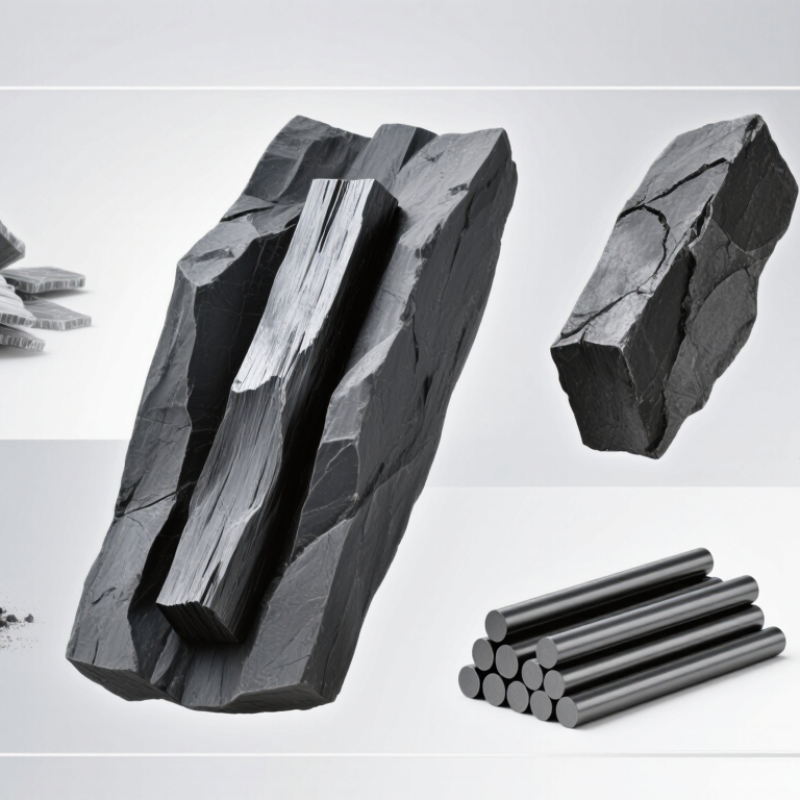
In 2026, graphite raw materials are best compared by origin and structure, since these factors affect processing and performance. Natural graphite is mined from ore and commonly sold as flake, vein, or microcrystalline graphite. Flake graphite has thin, plate-like particles that can be seen under magnification. Vein graphite forms in narrow geological fissures and may have high carbon content, though deposits are limited. Microcrystalline graphite, often called amorphous graphite in commerce, consists of very small crystals. The name can be misleading.
Synthetic graphite is produced by heating carbon-rich feedstocks, such as petroleum coke, to high temperatures. Its properties depend on feedstock, heat treatment, and forming method. Structure matters, too. Crystallinity, particle size, porosity, and preferred orientation influence conductivity and strength. A bag of coarse flakes behaves differently from a dense, fine-grained powder. The labels are useful, but not perfect. A practical assessment should include carbon content, ash, moisture, particle-size distribution, and application-specific testing. Samples from the same category can still perform differently. That detail is easy to overlook.

Flake graphite is valued for its layered structure, electrical conductivity, and ability to withstand high temperatures. Grades are commonly distinguished by flake size and carbon content, while ash and moisture levels also affect performance. Exact specifications vary by supplier and application, so a grade name alone is not enough. Check the product data.
Processing usually begins with crushing and flotation to separate graphite from surrounding rock. The concentrate is then dried and screened into size fractions. Larger flakes may suit expandable graphite and some refractory products; finer fractions can serve in lubricants and other industrial materials. Battery anodes require additional steps, such as shaping and purification, before the material is suitable for use. Processing choices matter.
A visible flake is not automatically a better flake. For a buyer, consistent particle-size distribution and verified purity may matter more than appearance. In practice, dust, moisture, and uneven sizing can complicate handling or reduce process consistency. These details are easy to overlook. Flake graphite supports several important uses, but matching a grade to the end application takes testing, not guesswork.
Amorphous graphite is a naturally occurring, fine-grained form of graphite. Its particles look dense and earthy rather than like the distinct flakes found in flake graphite. Carbon content, ash, moisture, and particle size can vary by deposit and processing method. It is not uniform. That variation affects how reliably a material performs in production.
Industries use amorphous graphite in foundry coatings, refractory products, lubricants, and some friction materials. In foundries, a fine powder can help create a smoother casting surface and reduce metal sticking to molds. Refractory makers value its heat resistance, while lubricant applications depend on particle size and operating conditions. It is easy to treat all graphite grades as interchangeable; that is a mistake. Amorphous graphite generally has different crystallinity and performance characteristics from flake graphite, so it may not suit every application.
Tips: Request recent test data for fixed carbon, ash, sulfur, moisture, and particle-size distribution. Match the grade to the process, not just the price per tonne. Small trial batches can reveal coating coverage, flow, or residue issues before full-scale use. Supplier figures help, but real production results still deserve a check.
Vein graphite forms when carbon-rich fluids move through fractures in surrounding rock and deposit graphite as conditions change. Over geological time, these deposits can develop into compact seams or branching veins. Some contain large, well-ordered crystals. The details vary by deposit.
Its reputation for high purity needs context. Natural vein graphite may contain mineral impurities, and processing affects the final carbon content. A laboratory assay, not appearance alone, can establish purity. Not always obvious. For buyers, crystal structure, ash content, particle size, and consistency all matter. A shiny piece is not a specification.
The material’s crystallinity and heat resistance suit specialized uses, including high-temperature crucibles, certain lubricants, and conductive components. Its dense structure can be useful where fine, stable performance matters more than low cost. Yet supply and processing can limit practical choices. The picture is less tidy than a “premium” label suggests. Matching a grade to a real operating temperature, load, and wear pattern takes testing, and even careful selection may need revision.
Typical carbon content ranges in beneficiated natural graphite concentrates
Vein graphite is valued for its naturally high purity and specialized applications. Flake graphite is used in applications such as batteries and refractories, while amorphous graphite is commonly used in products such as lubricants and foundry materials. Actual carbon content varies by deposit and processing; these ranges describe typical concentrates, not unprocessed ore.
Synthetic graphite begins with petroleum coke, a carbon-rich residue from oil refining. Needle coke is a premium, highly crystalline form valued for its low thermal expansion. Regular petroleum coke is more widely available, but its sulfur, metals, and grain structure can limit use in demanding applications. Coke is not interchangeable. The International Energy Agency’s Global Critical Minerals Outlook 2024 reports that China supplies around 90% of refined graphite, highlighting how concentrated processing remains.
Production typically starts by calcining coke to remove moisture and volatile compounds. Producers then mill and blend it with a carbon binder, often pitch, before shaping and baking the material. Final graphitization heats it to roughly 2,800–3,000°C, reorganizing carbon into graphite. Small changes in feedstock and temperature affect density, conductivity, and particle shape. Needle coke can support high-performance electrodes and battery anodes, but availability and cost matter. The route is energy-intensive. The U.S. Geological Survey’s Mineral Commodity Summaries 2025 identifies petroleum coke as a key feedstock for synthetic graphite. Actual product quality still depends on careful process control, and no single coke grade guarantees consistent performance.
| Material or stage | What it is | Key characteristics | Typical production route | Common applications and considerations |
|---|---|---|---|---|
| Sponge petroleum coke | Porous solid carbon produced as a by-product of petroleum refining, commonly through delayed coking. | Its properties vary with crude feed and refinery operation. Sulfur, metals, ash, and volatile matter can affect suitability for graphite production. | Usually calcined to remove much of its moisture and volatile matter, then crushed, milled, classified, and used with a carbonaceous binder. The formed body is baked and graphitized. | A widely used feedstock for synthetic graphite. Selected grades can be used in electrodes and battery-anode materials; feedstock quality and subsequent processing influence final performance. |
| Petroleum needle coke | A specialty petroleum coke with a strongly elongated, needle-like structure, typically made from suitable aromatic refinery streams. | Its particle structure can promote directional properties and relatively low thermal expansion in graphite products. Quality depends on feedstock and process control. | The coke is typically calcined, sized, blended with binder pitch, formed, baked, and graphitized. Product specifications determine the required preparation and finishing steps. | Commonly used for graphite electrodes, especially where electrical and thermal performance is important. It is also a potential feedstock for certain synthetic graphite anode products. |
| Coal-tar-pitch needle coke | Needle coke made from prepared coal-tar-based feedstocks rather than petroleum-refinery streams. | Like petroleum needle coke, it has an oriented, elongated structure. Its characteristics and impurity profile depend on the feedstock and manufacturing conditions. | Prepared feedstock is carbonized under controlled conditions; the resulting coke is then calcined and processed into graphite products through forming, baking, and graphitization where required. | Used as a needle-coke feedstock for graphite products. It is not interchangeable with every petroleum needle coke grade; end use depends on measured properties and customer specifications. |
| Calcination | A heat-treatment step applied to green petroleum coke before many downstream uses. | Reduces moisture and volatile matter and changes the coke’s physical and electrical properties. It does not, by itself, convert coke into fully graphitized carbon. | Industrial calcination commonly uses temperatures roughly in the 1,200–1,400°C range, with the specific profile depending on the coke and process. | Calcined petroleum coke is an intermediate feedstock for electrodes, anodes, and other carbon products. Actual quality is assessed against the intended application. |
| Forming, baking, and optional impregnation | Steps that turn prepared coke particles into a dense carbon body, often using coal-tar or petroleum pitch as a binder. | Mixing, particle-size distribution, forming pressure, binder, and baking schedule affect density, strength, and porosity. | The mix is formed by methods such as extrusion or pressing, then baked to carbonize the binder. Some products undergo pitch impregnation and rebaking to reduce open porosity. | Used in manufacturing graphite electrodes and other shaped graphite products. The number of impregnation cycles and process details vary by product specification. |
| Graphitization and finishing | High-temperature conversion of baked carbon into a more ordered graphitic structure, followed by product-specific finishing. | Graphitization temperatures are commonly around 2,500–3,000°C, depending on product and process. Purification may be used when low impurity levels are required. | Baked carbon is heated in a graphitization furnace. Subsequent steps may include machining, crushing, milling, classification, coating, or purification. | Produces synthetic graphite for uses including electrodes, industrial components, and battery-anode materials. Exact performance depends on the feedstock, process route, and final product design. |
Note: Temperature ranges are indicative industrial ranges, not universal specifications. Petroleum coke is a broad material category; needle coke is a specialized coke grade, and neither feedstock name alone guarantees a particular finished-graphite performance.
Logel’s Auto Parts
116 Bridge St East
Kitchener, Ontario
N2K 1J6
Phone: 519-745-4751
Toll Free: 1-800-818-9118
Hours 8:00-5:00 Monday to Friday
At Logel’s Auto Parts, we serve a range of communities in Southern Ontario, including:
Sign up today for the latest updates from the Logel’s Auto Parts team, including pricing for scrap vehicles, our newest product lines, current operating hours, and much more.