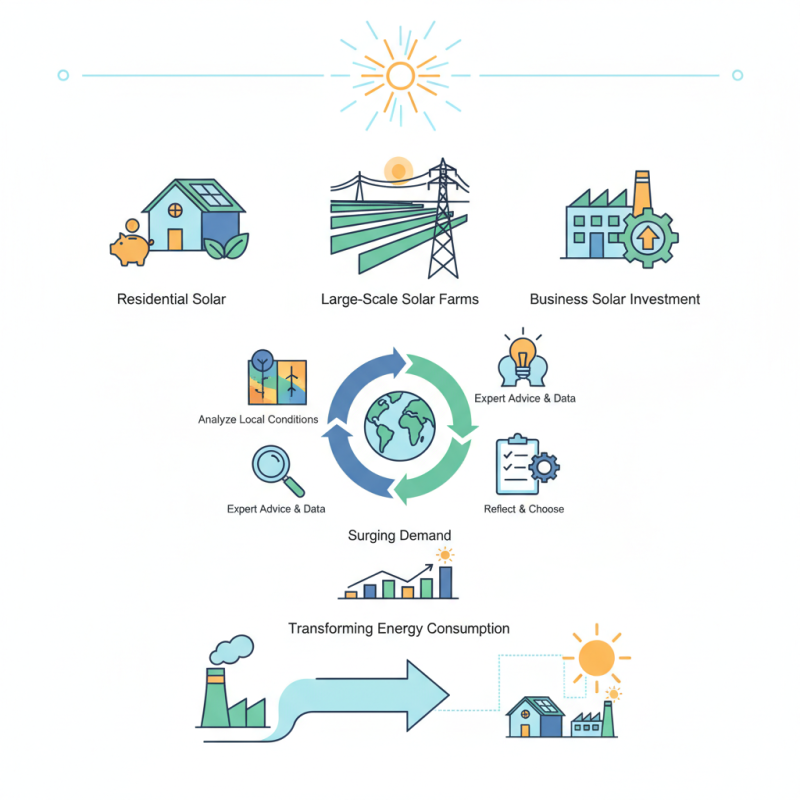
The demand for renewable energy has surged in recent years. Solar Applications stand at the forefront of this revolution. Buyers globally are exploring various solar solutions. Understanding these applications can drive meaningful change.
Solar applications offer significant benefits. They provide cost savings and reduce carbon footprints. From residential solar panels to large-scale solar farms, the possibilities are vast. Businesses are also investing in solar energy to enhance sustainability. However, not all applications fit every buyer's needs. Some options may lack efficiency in certain regions. It’s essential to analyze local conditions. Making the right choice requires knowledge and consideration.
Navigating these options can be challenging. Buyers should seek expert advice and reliable data. This ensures informed decisions based on current market trends. Reflecting on available technologies will lead to better outcomes. Embracing solar applications can transform energy consumption for consumers and companies alike.
As the world shifts towards sustainable energy, solar power stands out. Its applications are diverse, appealing to global buyers. Homeowners can harness solar panels for energy savings. They reduce electricity bills and decrease reliance on fossil fuels. Commercial buildings benefit from solar installations too, making them more eco-friendly and cost-effective.
Solar energy isn't just for rooftops. Agrivoltaics combines farming with solar energy generation. This method allows crops to thrive while panels produce electricity. It’s a win-win for farmers and energy producers. Additionally, solar water heaters are gaining traction. They provide hot water using the sun’s energy, significantly cutting down energy costs.
However, potential buyers must consider system maintenance. Like any technology, solar systems require upkeep. It's important to assess local weather patterns and sunlight exposure. Producers need to ensure equipment suits specific climatic conditions. A mismatch can affect efficiency and lead to regrets. Understanding both benefits and limitations is crucial for making informed decisions.

When considering solar applications, understanding different technologies is crucial. Solar energy can be harnessed in various forms, each with unique features. Photovoltaic (PV) systems convert sunlight directly into electricity. They are versatile and can be used in residential and commercial settings. Concentrated solar power (CSP) systems, meanwhile, use mirrors to focus solar energy, generating heat for power production. These are typically suited for large-scale installations.
Tips: Research local incentives. Many regions offer financial benefits for solar installations. Knowing these can influence your decision significantly. Check the efficiency ratings of different technologies too. Higher efficiency often means better long-term returns.
Another notable technology is solar thermal systems, which heat water or air for domestic use. These systems can save energy costs, especially in areas with high sun exposure. However, they may require more space than PV systems. Keeping maintenance in mind is essential. Over time, performance may degrade, and regular checks become necessary.
Tips: Always consult with experts. They can help tailor solutions to specific needs. Ensuring proper installation is vital for maximizing energy production. Always anticipate adjustments as technology evolves.
When considering solar energy solutions for residential use, several applications stand out. Homeowners often seek systems that not only reduce energy bills but also increase property value. Solar panels remain a popular choice. They convert sunlight into electricity, which can power home appliances. Additionally, solar water heaters can provide hot water for daily needs, saving energy.
Tips: Consider the orientation of your roof. South-facing roofs generally receive the most sunlight. Evaluate your home’s energy consumption to determine the size of the solar system needed. A local energy audit can provide tailored insights into how much energy you really need.
Battery storage systems are emerging as essential components for residential solar applications. They store excess energy generated by solar panels for use during cloudy days or nighttime. However, choosing the right battery can be challenging. Factors like capacity and lifespan require careful consideration.
Tips: Compare different battery technologies. Lithium-ion batteries typically offer higher efficiency. Always look for warranties that assure long-term reliability. Reflect on whether a hybrid system, combining solar with grid power, might ensure a more consistent energy supply.
| Application | Description | Advantages | Estimated Cost (USD) | Payback Period (Years) |
|---|---|---|---|---|
| Residential Solar Panels | Photovoltaic panels installed on rooftops to generate electricity. | Reduces electricity bills, environmentally friendly. | $15,000 - $25,000 | 5 - 7 |
| Solar Water Heating | Uses solar collectors to heat water for residential use. | Energy-efficient for water heating, reduces gas/electricity costs. | $3,000 - $7,000 | 3 - 5 |
| Solar Battery Storage | Storage systems for excess solar energy for later use. | Increases energy independence, provides backup during outages. | $5,000 - $15,000 | 6 - 10 |
| Solar-Powered Garden Lights | LED lights powered by solar energy for outdoor lighting. | Easy installation, no wiring needed, eco-friendly. | $50 - $200 (per unit) | N/A |
| Home Solar Air Conditioning | Cooling systems powered by solar panels or thermal energy. | Significantly reduces cooling costs, environmentally friendly. | $10,000 - $18,000 | 5 - 10 |
Solar energy is transforming businesses across various sectors. Companies are exploring innovative applications that not only reduce costs but also enhance sustainability. Commercial solar installations can harness the sun's power for electricity generation, heating, and even cooling systems.
In the retail industry, stores are opting for rooftop solar panels. This initiative cuts energy bills significantly while supporting eco-friendly goals. Solar can also power signage and parking lot lights. Such applications show how solar energy can blend seamlessly into daily operations.
Tips: Evaluate your current energy consumption. Identify peak usage hours when solar production aligns. Understanding your specific needs helps in designing a tailored solar solution.
In manufacturing, solar applications can drive substantial advancements. Factories can utilize solar thermal systems for heating processes or solar power for machinery. However, companies must consider initial installation costs and long-term savings. This reflection ensures that investments in solar energy are justifiable and beneficial.
Tips: Research available incentives and rebates for solar installations. Many regions offer financial assistance, which can make the transition easier.
Solar energy is a powerful tool for sustainable development. It offers numerous benefits, making it an attractive option for businesses and communities. Solar power reduces greenhouse gas emissions significantly. This is crucial in the fight against climate change. By harnessing sunlight, we can minimize our reliance on fossil fuels. This shift not only conserves resources but also promotes cleaner air.
Many industries are turning to solar applications. They include solar panels for electricity and solar heating systems. These solutions often lead to lower energy costs over time. However, initial costs can still be a barrier for some. Diverse financing options should be explored, as they can ease this burden. Additionally, not every region has the same solar potential. Local factors, such as weather patterns and sunlight availability, must be evaluated.
While solar energy is promising, challenges remain. Installing solar panels requires significant planning and investment. Furthermore, the technology is still evolving. There’s a need for ongoing maintenance to ensure efficiency. Understanding these aspects can guide informed decisions. Solar adoption is beneficial, yet it requires commitment and awareness of limitations.
Logel’s Auto Parts
116 Bridge St East
Kitchener, Ontario
N2K 1J6
Phone: 519-745-4751
Toll Free: 1-800-818-9118
Hours 8:00-5:00 Monday to Friday
At Logel’s Auto Parts, we serve a range of communities in Southern Ontario, including:
Sign up today for the latest updates from the Logel’s Auto Parts team, including pricing for scrap vehicles, our newest product lines, current operating hours, and much more.