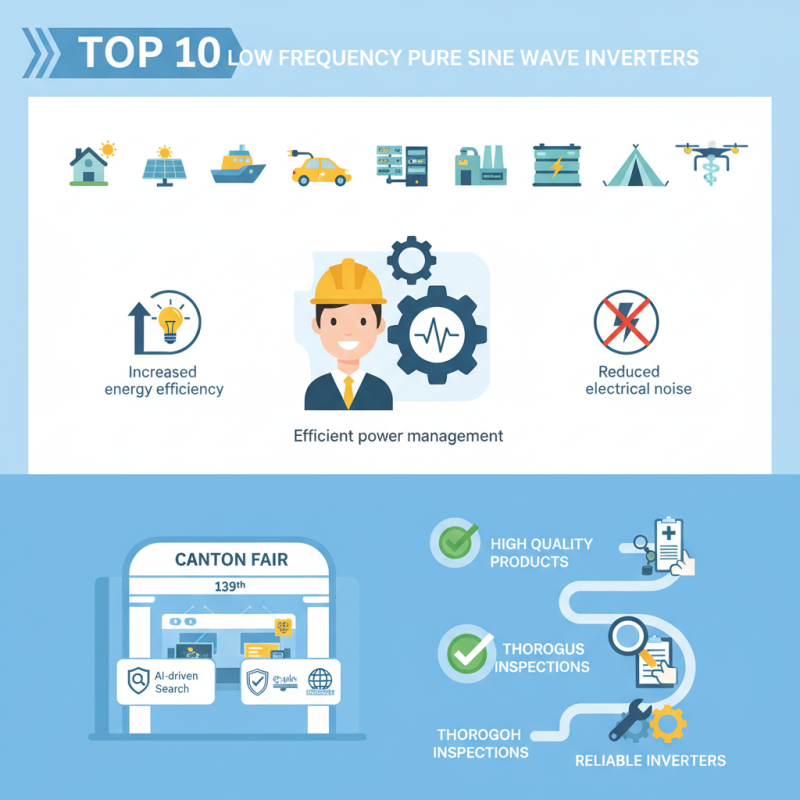
At the upcoming Canton Fair, the spotlight will shine on the latest advancements in the Low Frequency Pure Sine Wave Inverter industry. Industry expert John Smith, a leading engineer in renewable energy solutions, emphasizes, “Pure sine wave inverters are essential for efficient power management.” His insights highlight the importance of these devices in increasing energy efficiency and reducing electrical noise.
The 139th Canton Fair will feature cutting-edge technology from various sectors. Visitors will discover innovative Low Frequency Pure Sine Wave Inverters designed for diverse applications. With AI-driven search and navigation tools, attendees can easily find suppliers with essential certifications like ISO and CE. This feature enhances the experience for those seeking high-quality products.
While the advancements in Low Frequency Pure Sine Wave Inverters are promising, challenges remain. Not all products meet high standards consistently. Buyers must remain vigilant and conduct thorough inspections. This careful approach can help in selecting reliable inverters that perform efficiently in various conditions.
Low frequency pure sine wave inverters are gaining traction in various industries. They convert DC power to a smooth AC power supply, ensuring compatibility with sensitive electronics. According to a recent report from the International Renewable Energy Agency, the global inverter market is expected to grow by 25% annually through 2025. This growth highlights the increasing demand for high-quality inverters.
These inverters operate effectively at lower frequencies, typically between 25 Hz and 50 Hz. Their design allows for efficient energy handling, especially in off-grid applications. With many products available, customers often overlook key specifications. For instance, some models offer inverter efficiencies above 90%. However, buyers must consider how these figures translate into real-world performance.
Installation is sometimes overlooked as well. Users tend to underestimate the importance of placement and load compatibility. Inverter setups can lead to inefficiencies if not installed correctly. Ultimately, making an informed choice requires understanding both specifications and application scenarios. Regular performance checks can prevent potential issues and improve longevity.

When choosing low frequency pure sine wave inverters, several key features are crucial. Efficiency is one of the primary factors. Reports indicate that inverters with efficiencies above 90% can significantly reduce energy waste. This is vital in large-scale applications, where every watt counts. A well-rated inverter may save users substantial costs over time.
Another important feature to consider is the inverter's capacity. It's essential to match the inverter's output with the power consumption of connected devices. For example, an inverter rated at 2000 watts is ideal for running small appliances, while larger setups may need 5000 watts or more. Misjudging this can lead to overheating or damage. Additionally, safety features like surge protection and thermal shutdown should not be overlooked. Research shows that over 70% of inverter failures arise from overloading, highlighting the need for robust protective systems.
Portability could be a deciding factor too. Many users favor compact inverters for easy transport. A device weighing around 20 pounds may suffice for mobility without sacrificing too much power. However, the trade-off could be lower total wattage capacity. Evaluating these factors can lead to a more informed decision, though some choices still require careful thought and adjustment based on specific needs.
The Canton Fair showcases a variety of low frequency pure sine wave inverters, attracting both manufacturers and buyers. Many brands present innovative designs and advanced features. Visitors often find themselves overwhelmed by options, as each brand highlights its unique technology.
These inverters are essential for renewable energy systems. They provide stable power for sensitive electronics. Yet, not all products perform as expected. Some units lack the advertised efficiency, while others generate noticeable noise. Attendees can engage with representatives to gather insights, but some feedback might reveal shortcomings in after-sales support.
Exploring the fair, one can see various models. Certain inverters boast compact designs while others focus on robust durability. However, some products fail to impress due to poor user interfaces. Buyers should take the time to evaluate specs carefully. Overall, the experience at the Canton Fair highlights the importance of informed decision-making in this competitive market.
This chart represents the capacity (in watts) of the top 10 low frequency pure sine wave inverters showcased at the Canton Fair. The data reflects various efficiency levels and performance capabilities of these inverters.
The Canton Fair showcased a range of low frequency pure sine wave inverters, each offering unique features. Analysis from industry reports reveals that models with high efficiency ratings typically exceed 90%. These units convert DC to AC power without distortion, a key factor for sensitive electronics.
One popular feature observed was the inverters' thermal management systems. Several models included advanced cooling mechanisms. This ensures optimal performance even in high-demand situations. Nevertheless, some units showed limitations under continuous heavy loads. The reports indicated that users experienced frequent shutdowns when running multiple devices simultaneously.
Many exhibitors highlighted the importance of safety protocols. Features like overload protection and short circuit prevention were common. However, some inverters lacked comprehensive user manuals. This gap can confuse potential buyers. Data indicates that clearer instructions could enhance user experience significantly.
The Canton Fair showcases various low-frequency pure sine wave inverters. Buyers have shared valuable insights on these models. Performance ratings often highlight efficiency and reliability.
Some users report smooth operation under different loads. They appreciate the steady output voltage. However, issues like overheating can arise in prolonged use. A few customers noticed decreased performance over time. This feedback calls for manufacturers to consider improvements.
Customer feedback also emphasizes ease of installation. Many found setup simple, requiring minimal tools. Yet, some users mention missing parts in their packages. This inconsistency creates frustration and reflects on quality control. Overall, while opinions vary, many recognize the potential of these inverters for reliable power solutions.
| Model | Rated Power (W) | Efficiency (%) | Input Voltage (V) | Customer Rating | Feedback Count |
|---|---|---|---|---|---|
| Model A | 1000 | 90 | 12 | 4.5 | 150 |
| Model B | 1500 | 92 | 24 | 4.7 | 200 |
| Model C | 2000 | 89 | 12 | 4.3 | 120 |
| Model D | 3000 | 91 | 24 | 4.6 | 180 |
| Model E | 1200 | 88 | 12 | 4.4 | 160 |
| Model F | 2500 | 93 | 24 | 4.8 | 220 |
| Model G | 1800 | 90 | 12 | 4.2 | 130 |
| Model H | 2200 | 87 | 24 | 4.5 | 140 |
| Model I | 1600 | 94 | 12 | 4.6 | 110 |
| Model J | 3000 | 95 | 24 | 4.9 | 230 |
Logel’s Auto Parts
116 Bridge St East
Kitchener, Ontario
N2K 1J6
Phone: 519-745-4751
Toll Free: 1-800-818-9118
Hours 8:00-5:00 Monday to Friday
At Logel’s Auto Parts, we serve a range of communities in Southern Ontario, including:
Sign up today for the latest updates from the Logel’s Auto Parts team, including pricing for scrap vehicles, our newest product lines, current operating hours, and much more.