China’s lithium storage market includes inverter makers, battery specialists, and companies offering complete energy systems. This guide examines manufacturers associated with the Lithium Battery Inverter market and the details that matter beyond a product brochure. A brand name alone proves little.
Battery scientist Dr. Shirley Meng is known for her work on energy-storage materials and systems. A responsible paraphrase—not a verbatim quotation—of her systems-level perspective is: “Battery performance depends on how the entire system works together.” That principle matters here. A compatible inverter must communicate reliably with the battery’s management system, handle the intended voltage range, and provide suitable charging and discharge control.
We compare manufacturers through practical checks: product specifications, battery compatibility, monitoring features, warranty terms, and available technical support. For buyers, small details can have real consequences. A clear wiring diagram, responsive service contact, and readable fault codes may save hours during installation or troubleshooting. The strongest choice also depends on the application, such as a home backup system or a larger commercial installation. No ranking is perfect. Public product data can be incomplete, and a polished website cannot confirm long-term field performance. Use this overview as a starting point, then verify current specifications and support directly with each manufacturer.
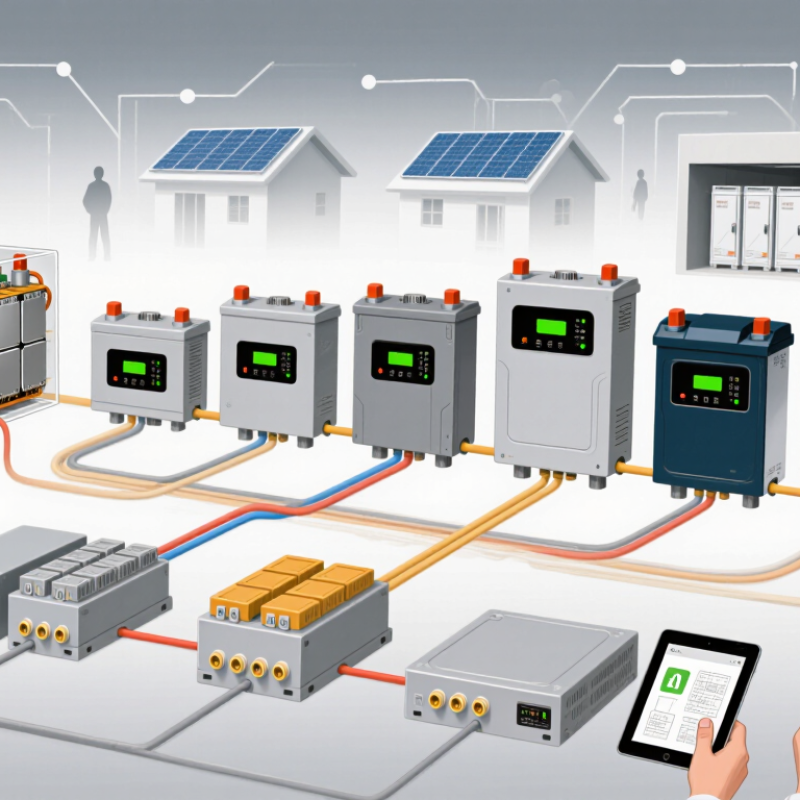
A lithium battery inverter connects a battery bank to household or commercial electrical equipment. The battery stores energy as direct current, while most appliances use alternating current. The inverter converts DC into AC at the voltage and frequency required by the electrical system. In a hybrid setup, it may also manage energy from solar panels or the grid. It is more than a simple converter.
During discharge, internal switches create a controlled AC waveform from the battery’s DC supply. Sensors monitor voltage, current, and temperature as power flows. When grid or solar power is available, a compatible inverter can reverse the process and charge the battery with regulated DC. The battery’s management system helps prevent unsafe charging and deep discharge. Communication between these systems matters. A mismatch can reduce performance or trigger a shutdown.
Choosing an inverter involves checking battery voltage, continuous output, surge capacity, and charging limits. A refrigerator compressor, for example, may briefly draw more power when it starts than during normal operation. Efficiency also varies with load, so a lightly loaded unit may waste some energy. Installation details matter. Cable size, ventilation, and correct settings affect reliability, yet they are easy to overlook. Manufacturer specifications should guide compatibility checks, and qualified installation is prudent for systems connected to building wiring.
A datasheet does not tell the whole story. Real loads can behave differently.

China Top Lithium Battery Inverter Manufacturers?
A lithium battery inverter links the battery’s direct-current supply to the alternating-current power used by household loads. The connection is more than two cables. Correct voltage, current limits, and battery settings help the system operate safely and predictably.
In many systems, a battery management system communicates with the inverter through CAN or RS485 wiring. It shares information such as state of charge, temperature, and permitted charge or discharge current. The inverter uses these limits to adjust power flow. Communication protocols vary, so matching connectors alone does not guarantee compatibility. Check the battery and inverter manuals before commissioning.
Physical connections matter just as much. Install cables sized for the expected current, keep runs practical, and use correctly rated overcurrent protection and disconnects. A loose terminal can heat under load; a poor communication connection may trigger alarms or prevent charging. That matters. During setup, verify polarity, configuration, and measured battery voltage before enabling normal operation. A tidy wiring diagram can still overlook a real-world detail, such as a long cable run causing voltage drop. Record the final settings and test charging and discharge behavior under controlled conditions. Not every fault is obvious at first.
Typical nominal and full-charge voltages for LiFePO₄ battery banks
The inverter’s DC input must match the battery bank’s voltage class. The battery connects to the inverter’s DC terminals, while the battery management system (BMS) protects the cells and may communicate with the inverter. Confirm compatible voltage limits and charging settings for the specific battery system.
A leading lithium battery inverter manufacturer is defined by more than a high efficiency figure. Its engineers should explain which battery voltage ranges, charge limits, and communication protocols the inverter supports. Clear compatibility details help installers avoid communication faults between the inverter and battery management system. Numbers are not enough.
Practical testing matters. Look for evidence of load, temperature, and protection testing under stated conditions, not just polished product claims. A well-designed unit should manage heat around power components and respond predictably to overloads or low battery voltage. Even strong designs can have limits; a dependable manufacturer states them plainly instead of promising performance in every setup.
Manufacturing consistency is equally important. Traceable components, documented quality checks, and repeatable factory testing help reduce variation between units. Ask how firmware updates are handled and what technical support is available when an installation behaves unexpectedly. Response times and warranty terms should be specific. Details matter. A manufacturer may offer a capable inverter, yet vague compatibility guidance can still leave installers guessing. That deserves a closer look.
Chinese lithium battery inverter manufacturers vary in how they combine batteries, power electronics, and control software. Some offer compact hybrid units for homes, pairing solar input with battery charging and grid backup. Others build off-grid systems for remote sites, where a generator connection and stable output under changing loads matter more.
The differences show up in the specifications. Check the battery voltage range, continuous output, short-term surge capacity, and solar input limits against the actual loads. A refrigerator compressor or water pump can briefly draw far more power than its running rating suggests. Communication between the inverter and battery management system also matters; compatible settings help prevent charging interruptions. Small details, big consequences.
Commercial and industrial products may support parallel operation, larger battery banks, or three-phase loads. Telecom and monitoring equipment often need steady backup, while mobile or isolated installations may prioritize compact size and simple service access. A product described as “all-in-one” is not automatically the best fit. Installation conditions, heat, ventilation, and maintenance access deserve close attention. This part is sometimes overlooked, even in otherwise careful comparisons. Ask for test data and clear operating limits, then compare the complete system rather than the inverter alone.
China’s lithium battery inverter industry is moving from basic power conversion toward integrated energy management. Manufacturers are combining inverter controls, battery communication, and monitoring software in one system. That matters when rooftop solar output peaks at noon, but a home needs power after sunset. Hybrid inverters must coordinate charging, household loads, backup circuits, and grid export. Small details count. Installers value clear wiring diagrams, stable firmware updates, and useful fault histories—not just headline efficiency. Remote diagnostics can shorten service visits, although poor connectivity still leaves some systems offline.
Another trend is product flexibility. Systems are being designed for different battery voltages, modular storage sizes, and residential or commercial use. Yet tighter integration raises a practical question: who resolves a fault spanning battery and inverter controls? More features do not automatically mean better reliability. Thermal management, protection coordination, and testing under changing loads remain central engineering tasks. Supply-chain pressure and component costs can affect delivery schedules and product revisions. Careful compatibility records may build trust, but field performance takes time to prove. A neat specification sheet is not field evidence. The market is changing quickly, and many deployments still lack long-term operating data.
Logel’s Auto Parts
116 Bridge St East
Kitchener, Ontario
N2K 1J6
Phone: 519-745-4751
Toll Free: 1-800-818-9118
Hours 8:00-5:00 Monday to Friday
At Logel’s Auto Parts, we serve a range of communities in Southern Ontario, including:
Sign up today for the latest updates from the Logel’s Auto Parts team, including pricing for scrap vehicles, our newest product lines, current operating hours, and much more.