Top 10 J1772 Charging Stations for Home and Business

A J1772 charging station can make daily electric-vehicle charging simpler at home or work. Plug in overnight, or add energy while employees and visitors are parked. The right unit depends on more than its price. Charging speed, electrical capacity, cable reach, weather protection, and installation needs all matter.

This guide compares ten J1772 charging stations for residential and business use. It considers practical details such as adjustable amperage, Wi-Fi features, access controls, and the length of each charging cable. Some drivers may value basic, dependable charging. Others may need network tools to track usage across several parking spaces. Small differences can change the experience.

A higher power rating does not guarantee faster charging. The vehicle’s onboard charger and the building’s electrical service also set limits. Installation costs can vary, too. Check current manufacturer specifications, warranty terms, and local installation requirements before buying. When electrical capacity is uncertain, ask a qualified electrician to assess the site.

There is no perfect pick for every property. A compact garage has different needs from a busy workplace lot. And product rankings can never capture every real-world detail. This list offers a useful starting point, not a substitute for checking fit, support, and operating costs. Consider your daily parking routine first. Then compare the stations that match it.
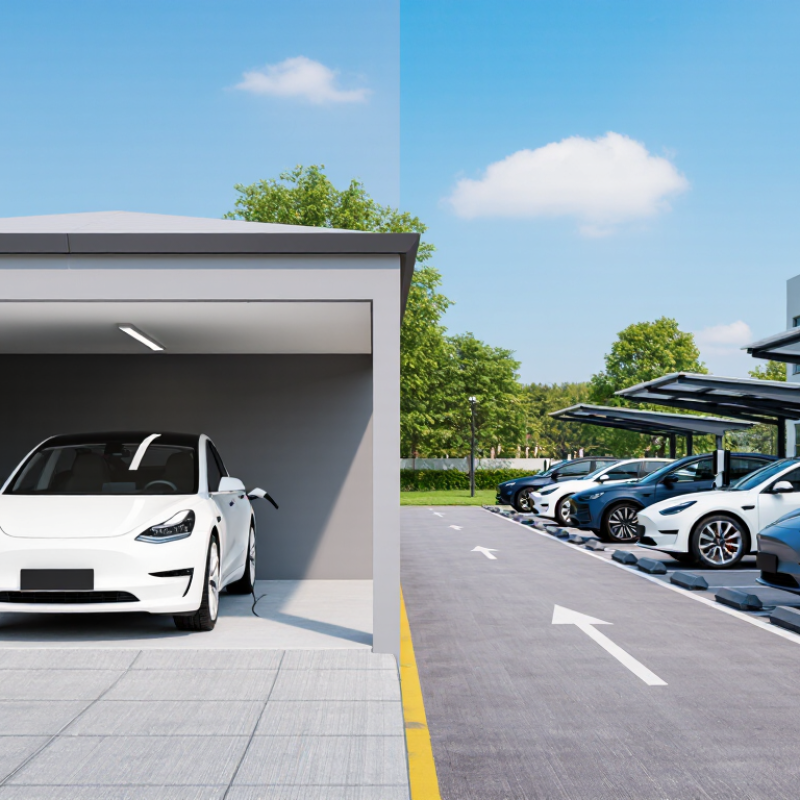
Top 10 J1772 Charging Stations for Home and Business

SAE J1772 Level 2 Basics: 208–240 V, Up to 80 A and 19.2 kW

SAE J1772 Level 2 charging uses 208–240-volt alternating current. At 240 volts and 80 amps, the theoretical output reaches 19.2 kilowatts. At 208 volts, the same current delivers about 16.6 kilowatts. The difference matters in workplaces and other sites with 208-volt service. Real charging speed can be lower.

The station supplies AC power; the vehicle’s onboard charger converts it for the battery. That charger may accept far less than 80 amps, so a high-rated station cannot guarantee faster charging. Check the vehicle’s specifications, circuit capacity, and station rating together. Small details matter.

An 80-amp installation needs suitable wiring and overcurrent protection, selected for the equipment and local requirements. A qualified electrician can assess the panel, cable route, and available service before installation. For example, a long run to a garage may affect wire sizing and project cost. Numbers on a product label are only part of the picture. It is easy to focus on peak power and overlook how often a vehicle actually needs it.

Top 10 J1772 Charging Stations for Home and Business - SAE J1772 Level 2 Basics: 208–240 V, Up to 80 A and 19.2 kW

The table compares ten unbranded J1772 Level 2 station configurations. Power figures are calculated as voltage × current; actual charging power depends on the available supply and the vehicle’s onboard AC charger.

Rank Station configuration Maximum current Output at 208 V Output at 240 V Indicative minimum circuit rating* Typical fit
1 Compact low-power station 12 A 2.50 kW 2.88 kW 15 A Low-use home charging or locations with limited electrical capacity
2 Entry-level station 16 A 3.33 kW 3.84 kW 20 A Overnight charging for modest daily driving
3 Light-duty station 20 A 4.16 kW 4.80 kW 25 A Residential use where a moderate charging rate is sufficient
4 Standard home station 24 A 4.99 kW 5.76 kW 30 A Home charging with a balance of output and circuit demand
5 Mid-range station 30 A 6.24 kW 7.20 kW 40 A Homes and small workplaces needing faster turnaround
6 Popular higher-output station 32 A 6.66 kW 7.68 kW 40 A Residential and workplace charging for a broad range of vehicles
7 High-output station 40 A 8.32 kW 9.60 kW 50 A Homes or businesses with suitable electrical capacity
8 Near-maximum plug-in class 48 A 9.98 kW 11.52 kW 60 A Higher-demand residential or commercial charging; installation requirements vary
9 Very-high-output station 64 A 13.31 kW 15.36 kW 80 A Commercial sites or properties with substantial electrical service capacity
10 Maximum-output J1772 AC station 80 A 16.64 kW 19.20 kW 100 A Specialized high-capacity installations; requires a compatible vehicle and site

*Indicative circuit ratings apply the common 125% sizing rule for continuous EV charging loads. Final circuit, wiring, connection method, and installation must match the station’s listing, local electrical code, and a qualified electrician’s assessment. A vehicle may draw less than the station’s maximum current, and a 208 V supply produces less power than a 240 V supply at the same current.


How to Compare 10 Stations: Power, Connectivity, Safety, and Warranty

When comparing ten J1772 charging stations, look beyond the maximum power rating. A 40-amp unit may charge faster than a 32-amp model, but only if your vehicle and home circuit support it. Check the electrical requirements before comparing advertised speeds. A charger that exceeds your available capacity is not an upgrade.

Connectivity should fit how the station will be used. Wi-Fi can support scheduling and energy tracking, while a clear screen or simple controls may be more useful in a shared workplace. Ask whether core charging works without an internet connection. Small details matter. A connection that drops in a garage can make remote features frustrating.

Compare safety features such as ground-fault protection, temperature monitoring, and a suitably rated enclosure for the installation location. Review the warranty term, covered components, and who handles service; a long warranty is less reassuring if the process is unclear. Also check cable length and connector storage. Picture reaching across a crowded garage every evening. That is not trivial. I would not rank all ten stations on one feature alone: installation limits, climate, and daily driving needs can change the best fit, and the product specifications may not reveal every practical inconvenience.

Top 10 Home J1772 Chargers: Amperage, Circuit Capacity, and Smart Features

A J1772 home charging station should match both your vehicle and your electrical panel. Many drivers choose a 32-amp unit on a 40-amp circuit, while a 40-amp unit typically needs a 50-amp circuit. A 48-amp model generally requires a 60-amp circuit. These pairings reflect the common 80% limit for continuous loads, but installation details and local requirements matter. Have a qualified electrician check the panel, wire size, and available capacity before choosing an amperage. More power is not always better. Your vehicle’s onboard charging limit may be lower, so extra capacity could add cost without shortening charging time.

Tips: Check the station’s actual output, not just its advertised maximum. Look for scheduling, energy-use tracking, and load management if other large appliances share the panel. Wi-Fi is useful, but reliable charging should not depend on a perfect signal.

Smart controls can shift charging to quieter hours or pause it when household demand rises. That can help avoid a panel upgrade, though load management must be properly configured. For a detached garage, measure the cable route and keep the connector reachable beside the parking spot. Small details matter. I would also leave room for future needs; plans change, and a perfect setup on paper can feel awkward beside a real driveway.

Top 10 Business J1772 Chargers: OCPP, Load Sharing, and Network Management

For a business, a J1772 charger is more than a wall-mounted connector. The network behind it determines how staff monitor sessions, set access rules, and review energy use. OCPP can support communication between charging hardware and management software, but supported versions and features vary. Check them before comparing quotes. A shared standard does not guarantee every function will work as expected.

Load sharing helps when several vehicles charge at once. For example, a small office may have four parking spaces but limited electrical capacity. A system can distribute available power across active chargers instead of assigning each unit its maximum output. Ask how it responds when one vehicle finishes charging or demand changes. Small details matter. So does a site-specific electrical assessment by a qualified professional.

Network management should make routine tasks visible, not mysterious. Look for clear session records, charger status alerts, user controls, and options for handling a network outage. Ask whether the system can export useful reports and how software updates are managed. Test the dashboard with realistic scenarios, such as a visitor needing access or a charger going offline. A neat feature list can still hide awkward workflows. That deserves a second look.

Installation and Incentives: DOE AFDC Guidance on Permits and Rebates

For a home or business J1772 charging station, installation planning starts before equipment arrives. The U.S. Department of Energy’s Alternative Fuels Data Center offers guidance on charging infrastructure, incentives, and permitting resources. Use it as a starting point, not a substitute for local approval. Permit rules can differ by city and property type.

Ask a licensed electrician to check the panel capacity, wiring route, and proposed circuit. A site visit may reveal a crowded breaker panel or a long conduit run across a garage wall. These details can change the estimate. Not glamorous, but important. Confirm permit requirements with the local building department, and check with the utility about service limits or any available programs. Businesses may also need to consider parking layout and expected charging demand.

Incentives can reduce costs, but eligibility often depends on location, applicant type, equipment, and installation date. Check current AFDC-linked resources and the relevant program administrator before buying or starting work. Save itemized invoices, permit records, and proof of payment; some programs require them. One awkward truth: paperwork can outlast installation. I would not assume a rebate is guaranteed, even when a project appears to qualify. Get written confirmation where possible, and keep copies of every application and inspection document.

Start typing and press Enter to search