What is the Importance of Car Lights for Safety?

Car lights play a crucial role in automotive safety. According to the National Highway Traffic Safety Administration, nearly 50% of all traffic-related deaths occur in low-light conditions. Proper illumination can significantly reduce this statistic. It helps drivers see the road and enhances visibility for other vehicles.

Many drivers overlook the importance of car lights. Some fail to replace burned-out bulbs or ignore faulty wiring. This negligence can lead to dangerous situations. In fact, a study by the AAA Foundation found that inadequate lighting contributes to about 30% of accidents during night driving. Clear headlights and taillights can be the difference between a safe commute and a tragic incident.

Even in daylight, car lights serve a purpose. Bright daytime running lights increase vehicle visibility. Yet, some vehicles are not equipped with these features. This raises questions about manufacturer responsibilities. Drivers should reflect on their car light maintenance and its impact on others. It's more than a functionality issue; it's a safety obligation.

What is the Importance of Car Lights for Safety?

Types of Car Lights and Their Functions

Car lights play a crucial role in ensuring safety on the road. Different types of lights serve unique functions. Headlights illuminate the path ahead, allowing drivers to see clearly at night. They help spot pedestrians and obstacles. Many drivers forget to check their headlights regularly. This oversight can lead to dangerous situations.

Brake lights are equally essential. They alert drivers behind when a vehicle is slowing down. Without functioning brake lights, collisions could occur. A common issue is a burned-out bulb that goes unnoticed. When a driver fails to notice it, they risk causing an accident.

Turn signals provide critical information about driving intentions. These lights signal to others when a vehicle is changing lanes or making turns. Drivers sometimes forget to use them. This can lead to confusion and potential crashes. It’s important to remember that a simple flick of a switch can prevent serious incidents. Regular checks of all car lights are necessary for safe driving.

What is the Importance of Car Lights for Safety? - Types of Car Lights and Their Functions

Type of Light Function Importance for Safety
Headlights Illuminate the road ahead Essential for night and low-visibility driving
Taillights Indicate position to vehicles behind Crucial for preventing rear-end collisions
Turn Signals Indicate direction of travel Important for safe lane changes and turns
Brake Lights Signal to others that vehicle is slowing Reduces chances of rear-end accidents
Fog Lights Improve visibility in fog, rain, or snow Enhances safety in poor weather conditions
Hazard Lights Alert others of a stopped or slow vehicle Increases visibility in emergency situations

The Role of Headlights in Night Driving Safety

Driving at night poses unique challenges. Low visibility can lead to accidents. That’s where headlights play a crucial role. Good headlights illuminate the road ahead, allowing drivers to spot obstacles early. They help in seeing pedestrians, animals, or debris. Poor headlight performance can result in hazardous situations.

Many drivers don’t realize the importance of regular headlight maintenance. A dim light can mean reduced visibility. Adjusting headlight angles is also essential. If they are too low or high, they may not serve their purpose. This oversight can create a blind spot. Even a small malfunction can lead to serious consequences.

Moreover, not all headlights are the same. Some lights are better for different conditions. Yellow lights might help in fog, while white lights offer clarity. Understand what works best for your driving habits. Reflecting on these details can improve safety on the road. Driving with care and being aware of headlight effectiveness is vital.

Importance of Car Lights for Safety

This chart illustrates the significance of different types of car lights in enhancing driving safety during nighttime conditions. The data represents the average effectiveness percentage of each type of light in improving visibility and ensuring safety on the road.

Importance of Tail Lights for Visibility and Communication

What is the Importance of Car Lights for Safety?

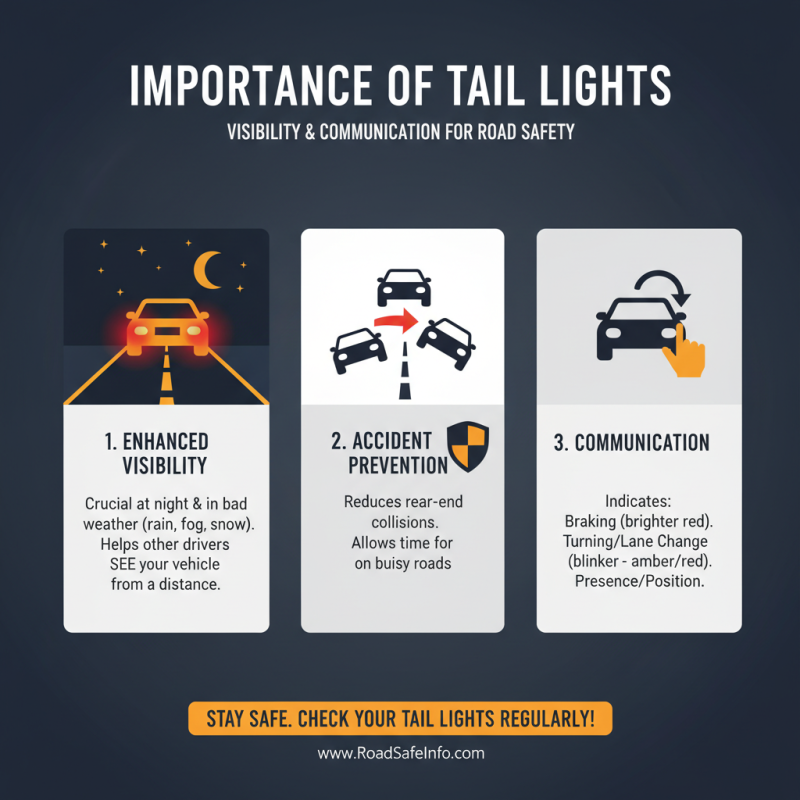
Tail lights play a crucial role in vehicle safety. They are essential for visibility, especially at night or in adverse weather conditions. A well-functioning tail light allows other drivers to see your vehicle from behind. This helps prevent accidents on busy roads.

Moreover, tail lights communicate important information to other drivers. When you brake, your tail lights illuminate brighter, signaling your intention to slow down. If a driver fails to notice this, the outcome could be disastrous. Unfortunately, many drivers neglect to maintain their tail lights. A burned-out bulb can lead to miscommunication. This small oversight can result in dangerous situations.

In addition to visibility, tail lights reflect a driver's awareness. They show that someone is taking responsibility for their vehicle. Regular checks can prevent many issues. Ignoring tail light maintenance creates risks—both for you and others on the road. A simple check can save lives.

The Impact of Turn Signals on Preventing Accidents

Turn signals play a crucial role in road safety. They communicate a driver's intentions to others on the road. When a driver uses their turn signal, they alert those around them of their next move. This simple action can prevent misunderstandings and reduce the risk of accidents.

Consider a busy intersection. A car prepares to turn left. Without a turn signal, drivers behind may be unsure of what to expect. Confusion can lead to unexpected lane changes or sudden stops. These actions increase the likelihood of collisions. In contrast, a clearly activated turn signal provides clarity and encourages safe driving practices.

Despite their importance, many drivers forget to use turn signals. This oversight could stem from distractions or a lack of awareness. Some may not see the harm in skipping this step. However, it can have significant consequences, affecting not just themselves but also others on the road. Emphasizing the importance of turn signals is vital for enhancing overall road safety.

Legal Regulations Surrounding Car Lighting for Safety

Car lighting is not just a convenience; it’s a fundamental aspect of road safety. Legal regulations mandate specific lighting standards to reduce accidents. In the U.S., for instance, the National Highway Traffic Safety Administration (NHTSA) sets forth guidelines on car lighting that showcase the importance of visibility. According to their reports, about 50% of traffic deaths occur in low-light conditions. This statistic underscores the need for effective car lighting systems.

Most states require vehicles to have headlights that meet brightness and positioning regulations. Drivers are obligated to use headlights during specific times, like dusk and dawn. Studies show that using proper car lights can decrease accidents significantly. The AAA Foundation for Traffic Safety highlighted that up to 30% of drivers do not utilize their headlights at appropriate times. This negligence can lead to serious consequences. Yet, many drivers continue to overlook the necessity of headlight maintenance, failing to replace burned-out bulbs on time.

Reflecting on these regulations, it’s clear that many drivers are not fully aware of lighting laws. An estimated 10% of drivers use their vehicles without functioning lights daily. Enforcement is varied, leading to confusion about compliance. Continuing education on the importance of proper lighting is crucial. Without it, safety risks remain unaddressed, and the roads could become increasingly hazardous.

Start typing and press Enter to search