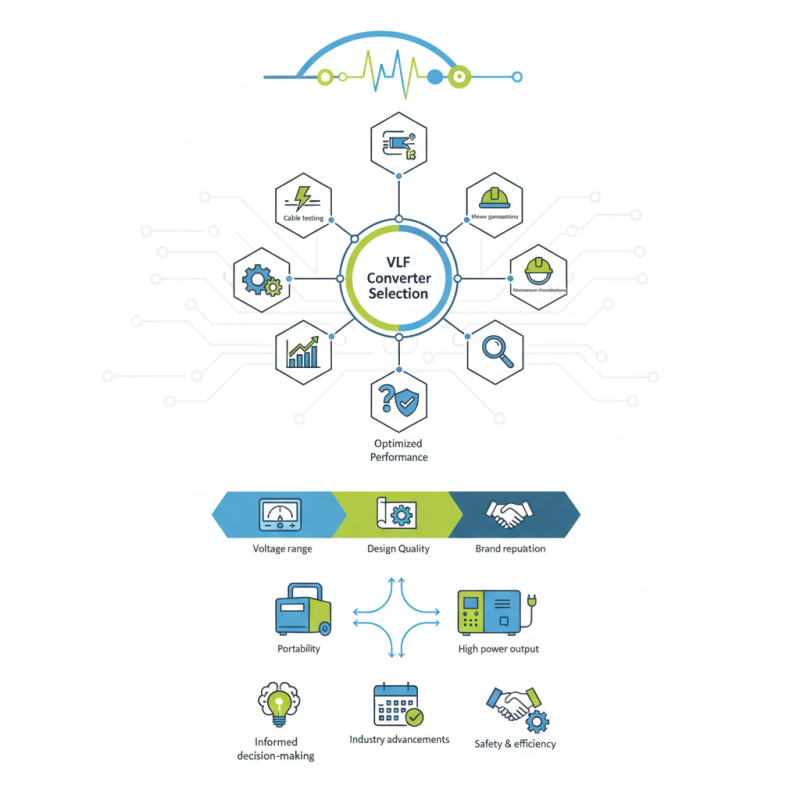
Choosing the right Vlf Converter is crucial for various applications, from cable testing to power generation. According to industry reports, the demand for VLF converters has risen by 15% over the last two years, highlighting their importance. These converters ensure optimized performance and reliability in high-voltage scenarios. Selecting the best option can be complex due to varying specifications and functionalities.
Different projects demand different capabilities. Some converters excel in portability, while others focus on high power output. An incorrect choice may lead to inefficiencies or even damage to sensitive equipment. It's essential to evaluate specific needs carefully. For instance, a converter with a low output may suffice for routine maintenance yet prove inadequate for extensive installations.
As you consider your options, focus on factors such as voltage range, design quality, and brand reputation. These can significantly impact performance. Remember, not every highly-rated product will suit your unique requirements. Keeping up with industry advancements is also vital for informed decision-making. An informed choice today can enhance safety and operational efficiency tomorrow.
VLF (Very Low Frequency) converters are essential in various applications, particularly in power distribution systems and electrical testing. They play a crucial role in ensuring the performance and longevity of electrical equipment. According to recent data from industry reports, nearly 30% of electrical failures in substations can be attributed to insulation breakdowns. VLF converters help mitigate these issues by providing reliable insulation testing.
Understanding the importance of VLF converters is critical for professionals in the field. These devices generate low-frequency AC voltage, ideal for testing insulation materials in cables and transformers. A study by the IEEE indicates that regular testing can increase equipment lifespan by up to 40%. These results underscore the necessity of investing in quality VLF converters to prevent costly downtimes and repairs.
While the benefits are clear, not all VLF converters are created equal. It is vital to assess technical specifications, such as output voltage and frequency stability. Manufacturers often provide varied performance metrics, and distinguishing them requires careful analysis. A report from a leading industry magazine highlighted that nearly 45% of engineers reported challenges in selecting suitable converters. This reflects the need for in-depth consideration when choosing equipment for specific applications.
| Feature | Description | Importance |
|---|---|---|
| Voltage Range | The operational voltage range that the converter can handle. | Ensures compatibility with your specific application requirements. |
| Output Frequency | The frequency of output current, typically in kHz or MHz. | Affects performance and efficiency of the application in use. |
| Power Rating | The maximum power output rating of the converter, usually in Watts. | Critical for ensuring the converter can meet your power requirements. |
| Size and Weight | Physical dimensions and weight of the converter. | Important for installation constraints and portability. |
| Cooling Mechanism | Method used for dissipating heat, such as passive or active cooling. | Affects reliability and efficiency during operation. |
| Input Impedance | Resistance faced by the input signal, measured in Ohms. | Impacts signal integrity and system compatibility. |
| Safety Standards | Compliance with international safety standards and regulations. | Ensures safe operation and mitigates risk of hazards. |

When selecting a Very Low Frequency (VLF) converter, several key factors come into play. First, consider the frequency range required for your specific application. Different converters may have varying operational capabilities. Look for units that cover the full spectrum needed for your work environment. Inadequate frequency coverage can lead to suboptimal performance and data loss.
Another crucial aspect is the power output of the VLF converter. This determines how efficiently it can drive the intended load. Ensure the chosen converter meets your energy requirements without excessive strain. Power ratings should be clear, and ideally, you should opt for a unit with a slightly higher capability to account for unexpected needs.
Finally, consider the ease of use and installation. Complicated setups can waste time and cause frustration. User-friendly interfaces and clear instructions can make a significant difference. Review customer feedback to gauge real-world usability. It’s essential to acknowledge that finding the perfect converter may take some trial and error. Embrace the learning process while grounding your decision in detailed research.
When evaluating different types of Very Low Frequency (VLF) converters, it’s essential to understand their strengths and weaknesses. A report from the International Electrotechnical Commission (IEC) highlights that various VLF converters are designed for specific applications and environments. For instance, some models work well in underground distribution systems, while others are more suited for overhead lines. This specificity can make a significant difference in performance.
Another vital consideration is the technology behind the VLF converter. According to a recent survey by the Institute of Electrical and Electronics Engineers (IEEE), converters using modern semiconductor technology often demonstrate better efficiency and reliability. However, older models might be more cost-effective in the short term. Performance metrics such as power factor, total harmonic distortion, and dissipation factor are also critical. Many users overlook these technical specifications, potentially leading to suboptimal choices.
Real-world applications reveal that not all converters perform equally under stress. Some users have reported overheating issues with certain types, raising concerns about long-term durability. Comparing field data and user reviews can provide insight into common challenges. For users focused on lengthy operational life and minimal maintenance, investing in higher-end converters might prove worthwhile, despite the initial price tag.
When evaluating VLF converters, several key specifications and features should be taken into account. Look for voltage rating, output power, and efficiency levels. These factors can significantly impact the performance of your converter. A robust converter will have clear ratings that align with your application needs.
Tips: Pay attention to the size and weight of the converter. Compact models offer portability but may sacrifice some power. Ensure the model you consider is suitable for your workspace.
Another aspect is compatibility with existing systems. Check whether the converter can interface seamlessly with your equipment. This compatibility ensures reliability and avoids unnecessary downtime.
Tips: Consider the cooling mechanism. Some converters may overheat, leading to performance issues. Adequate ventilation can prevent these complications. Always assess users’ reviews, as real-life experiences provide valuable insights.
When budgeting for a VLF converter, consider your specific needs. The average cost of VLF converters ranges from $1,000 to $10,000. This wide range reflects the varying specifications and features available. For a basic setup, you might spend less. However, advanced features tend to drive up the price significantly.
Next, think about operational costs. The efficiency of a VLF converter can impact your long-term expenses. According to industry reports, a more efficient model can reduce energy costs by up to 30%. This efficiency can justify a larger upfront investment. Sometimes, lower-priced converters lead to higher operating costs.
It’s important to assess warranty and support options. Some manufacturers provide extensive warranties, while others offer minimal support. A strong warranty might indicate better reliability. Conversely, cheaper models sometimes lack this assurance, risking future spending on repairs. Always weigh initial savings against potential future costs.
Logel’s Auto Parts
116 Bridge St East
Kitchener, Ontario
N2K 1J6
Phone: 519-745-4751
Toll Free: 1-800-818-9118
Hours 8:00-5:00 Monday to Friday
At Logel’s Auto Parts, we serve a range of communities in Southern Ontario, including:
Sign up today for the latest updates from the Logel’s Auto Parts team, including pricing for scrap vehicles, our newest product lines, current operating hours, and much more.