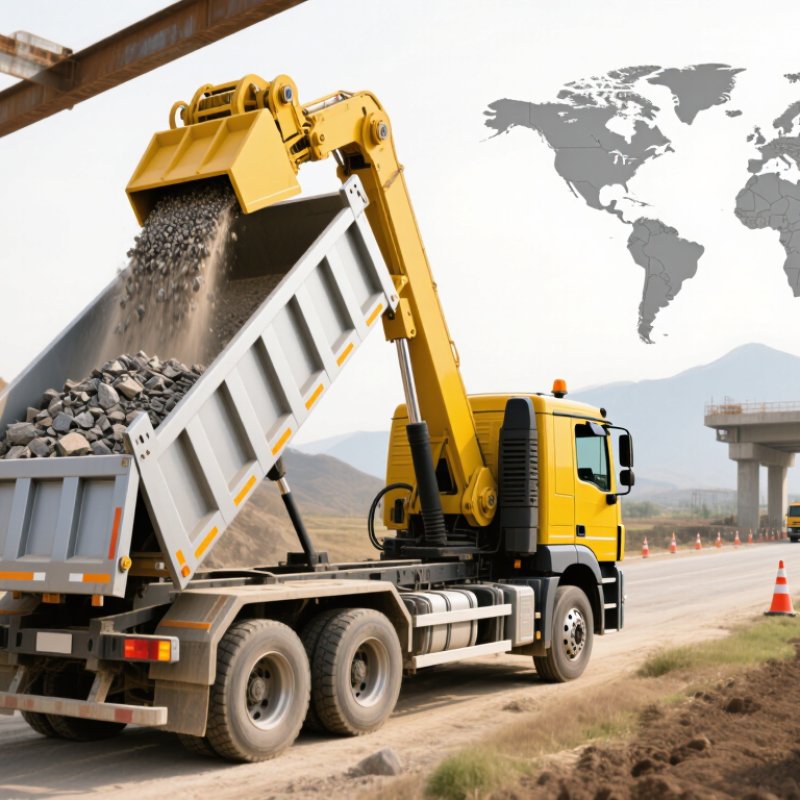
| End Dump Truck | Approximately 10–40 metric tonnes for road-going rigid trucks; larger articulated units can carry substantially more off-road. | Hydraulically raises the front of the body and discharges material through the rear. | Usually about 30–90 seconds, depending on body size, hydraulic system, and material flow. | Construction, quarrying, aggregate delivery, earthmoving, infrastructure projects, and general bulk-material transport. | Good road mobility and generally strong maneuverability; requires adequate clearance behind the vehicle. | Versatile, widely supported by service networks, suitable for many materials, and efficient where loading and unloading points are separated. | Higher rollover risk on uneven or soft ground when the body is raised; needs a stable unloading surface and sufficient overhead clearance. | High versatility |
| Side Dump Truck | Approximately 15–40 metric tonnes, depending on chassis, body configuration, and axle limits. | Hydraulically tilts the body to one side for lateral discharge. | Usually about 20–60 seconds. | Road construction, confined unloading areas, linear projects, and sites where rear clearance is limited. | Good unloading flexibility; can work where reversing space is restricted, but side stability and ground conditions remain important. | Can unload without backing directly toward a stockpile or edge; often reduces cycle-time constraints at narrow sites. | Requires side clearance; uneven loading or sloped ground can affect stability; body systems may be more specialized. | High site flexibility |
| Bottom Dump Trailer | Approximately 20–45 metric tonnes, subject to tractor, trailer, and road-weight regulations. | Opens longitudinal gates beneath the trailer to form a controlled windrow. | Usually about 15–45 seconds. | Long-distance aggregate transport, road base placement, paving projects, and well-prepared haul roads. | Strong highway efficiency; requires relatively flat, firm ground for accurate discharge and safe gate operation. | Fast and controlled spreading of granular materials; often productive for continuous road-building operations. | Less suitable for sticky or highly cohesive materials; limited ability to unload into deep piles or at irregular locations. | High for road projects |
| Articulated Dump Truck | Approximately 25–45 metric tonnes for many commonly used off-road configurations. | Rear end-dump body raised hydraulically. | Usually about 30–90 seconds. | Rough terrain, mines, large earthworks, remote infrastructure, steep grades, and wet or poorly maintained haul roads. | Excellent off-road traction and articulation; less efficient and less practical for extended public-road travel. | Strong performance on difficult terrain, high ground clearance, and good traction on grades and low-strength surfaces. | Higher acquisition, fuel, and maintenance costs; road transport may require permits or separate low-bed movement. | Very high for off-road work |
| Rigid Dump Truck | Approximately 30–400+ metric tonnes, with the largest units intended for mining rather than public roads. | Rear end-dump body raised hydraulically. | Usually about 30–90 seconds. | Large open-pit mines, major quarries, and dedicated haul roads with high production targets. | Stable and productive on engineered haul roads; turning radius and roadability can limit use outside controlled sites. | High payload potential, durable structure, and efficient production in large-scale mining cycles. | Limited flexibility, high operating cost, and poor suitability for mixed public-road and job-site operations. | High for large mines |
| Flatbed Truck with Bulk Containers | Approximately 10–30 metric tonnes, depending on the truck, container, and local axle restrictions. | Container is removed or emptied using separate lifting, tipping, or handling equipment. | Several minutes to substantially longer, depending on handling equipment and container design. | Intermodal logistics, packaged bulk products, sites with available cranes or forklifts, and mixed cargo operations. | Excellent highway flexibility; unloading is slower and highly dependent on auxiliary equipment. | Can transport different container types and cargoes; useful when return loads or multimodal transport are important. | Not a self-unloading solution; additional equipment, labor, and handling space may be required. | Medium for loose bulk material |
| Dump Trailer Towed by a Tractor | Approximately 15–40 metric tonnes, depending on trailer design and legal combination weight. | Hydraulic rear tipping, commonly powered through the tractor-trailer system. | Usually about 30–90 seconds. | Regional aggregate delivery, agricultural materials, construction supply, and operations requiring flexible tractor utilization. | Good highway range and interchangeability; longer combinations may require more room to turn and reverse. | Flexible fleet allocation, potentially high payload per power unit, and efficient use of standardized tractors. | More articulation points can complicate maneuvering; coupling, trailer maintenance, and legal combination limits must be managed. | High for regional routes |