A Back Stretcher Board may look simple: molded plastic, raised support points, and several adjustment levels. Yet choosing a reliable manufacturer takes more than comparing product photos. The World Health Organization’s 2023 low-back-pain fact sheet reports that 619 million people experienced low back pain in 2020, with projections reaching 843 million by 2050. WHO Director Dr. Anshu Banerjee called it “the leading cause of disability globally.” These figures describe a health burden, not demand for a particular stretching device. That distinction matters.
There is no widely recognized public report measuring the global Back Stretcher Board market as a separate category. So this manufacturer overview should be read as a sourcing guide, not a definitive market ranking. It will compare practical signals: material and finish, hinge and adjustment design, load testing, quality-control documentation, customization, and export experience. A smooth board on a showroom table tells little about durability; documented testing and traceable production tell more. Still, factory claims need verification. I should be cautious here. The board is not a medical diagnosis or a proven treatment for every cause of back pain. Buyers should assess product instructions and evidence carefully, especially when claims sound absolute. The strongest suppliers are not necessarily the loudest; consistency, clear specifications, and honest limits deserve equal attention.
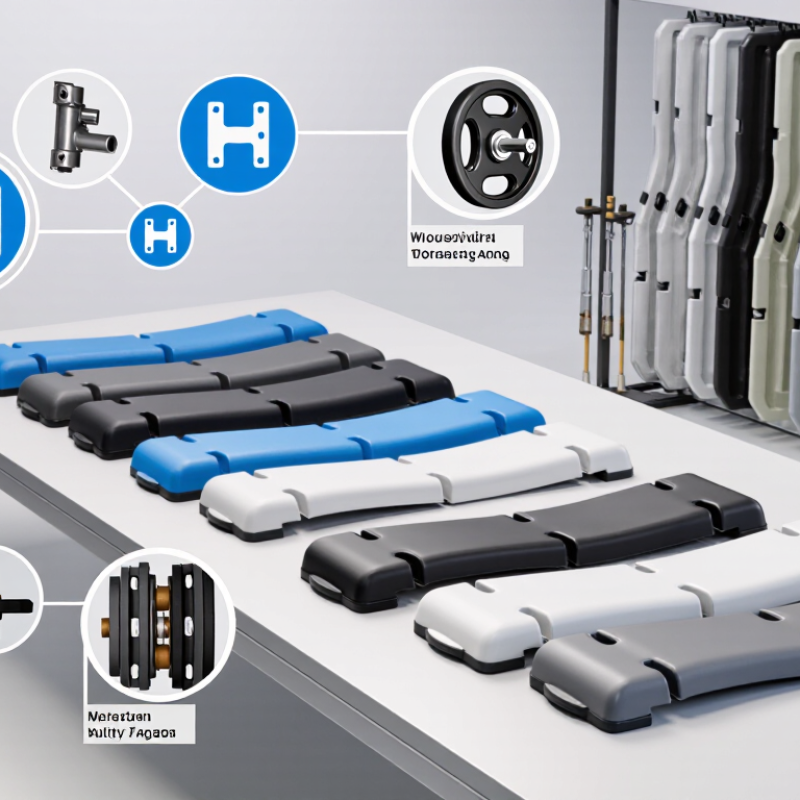
A back stretcher board is a shaped platform with raised ribs or adjustable arches. You lie on it so your lower back rests over the curve. The gentle extension may temporarily reduce pressure or ease tight muscles, though the feeling varies. It is not a device that “puts vertebrae back in place.” Small changes in arch height can feel surprisingly strong.
The World Health Organization’s 2023 low back pain fact sheet estimates that 619 million people experienced low back pain in 2020. It projects 843 million cases by 2050. That burden helps explain interest in simple home devices, but demand is not proof of effectiveness. A Cochrane review of spinal traction for low-back pain found little or no meaningful benefit for many outcomes. This evidence does not test every stretcher board, so certainty remains limited.
I’d start with a low arch and brief sessions, stopping if pain worsens, tingling appears, or symptoms spread down a leg. Relief can feel convincing. It may still be temporary.

China’s back stretcher board manufacturing landscape combines material processing, mold development, assembly, and export packaging. Factories may work with molded polymers, laminated wood, or mixed-material designs, depending on the board’s shape and target price. Curved profiles, raised contact points, and adjustable supports require careful tooling. Small changes in mold temperature or material thickness can affect flexibility and surface finish.
Details matter. A reliable production process should include checks for sharp edges, uneven contact points, and movement under load. Buyers can request material specifications, dimensional tolerances, and documented test results before placing larger orders. These checks do not replace independent product evaluation, but they make comparisons more concrete. Quality can vary between suppliers, even when product photos look nearly identical.
The market also reflects different order sizes and customization needs. Some manufacturers support changes to color, packaging, or board dimensions, while others focus on standard models and repeat production. Clear drawings and sample reviews help prevent misunderstandings about curvature, surface texture, and included accessories. Still, supplier information is not always equally detailed. That gap deserves attention. A careful buyer should verify production capacity, inspection practices, and delivery timelines rather than relying on a polished catalog alone.
This table summarizes ten practical manufacturing and sourcing dimensions for back stretcher boards. It is not a verified ranking of ten individual manufacturers; product specifications and capabilities vary by supplier and SKU.
| No. | Manufacturing Dimension | Common Market Practice | What to Verify with a Supplier |
|---|---|---|---|
| 1 | Product construction | Boards are generally rigid, molded products designed to support the back while a user lies on the device. | Request the product drawing, dimensions, component list, and photos of the actual production model. |
| 2 | Material selection | Molded plastics, including polypropylene or ABS, are used in this product category; the exact resin is model-specific. | Confirm the resin grade, recycled-content policy, material declaration, and whether the specification applies to the finished SKU. |
| 3 | Arch adjustment | Some designs include adjustable arch positions; other models use a fixed profile. | Check the number and spacing of adjustment positions, locking method, and stability under normal use. |
| 4 | Contact surface | Raised nodes or textured surfaces appear on some models; their layout and firmness differ by design. | Inspect edge finishing, surface consistency, and user-contact areas on a production sample. |
| 5 | Molding and tooling | Injection molding is a common process for rigid plastic consumer products of this type. | Clarify tool ownership, maintenance responsibility, sampling arrangements, and the process for approving design changes. |
| 6 | Load and durability claims | Load limits and durability claims are not uniform across the product category and should not be assumed from appearance alone. | Ask for the stated load limit, test method, test results, and any conditions or limitations attached to the claim. |
| 7 | Customization and OEM | Color, packaging, printed instructions, and selected product details may be offered as customization options, subject to supplier capability and order terms. | Confirm available options, minimum order quantities, sample charges, lead times, and artwork approval requirements. |
| 8 | Quality control | Inspection may cover dimensions, appearance, adjustment function, and packaging; inspection scope depends on the supplier and purchase agreement. | Agree on acceptance criteria, sampling level, defect definitions, and whether inspection occurs before shipment. |
| 9 | Compliance documentation | Applicable requirements depend on the destination market, product claims, and sales channel; a general certificate should not be treated as proof of every requirement. | Identify destination-specific obligations and check that documents match the product, applicant, test scope, and current requirements. |
| 10 | Packaging and logistics | Packaging formats and carton specifications vary by model, order, and shipping method. | Confirm packed dimensions, carton quantity, protective materials, shipping marks, and the final packing list before dispatch. |
Supplier-specific rankings, capacity figures, and certifications are intentionally omitted because they require current, independently verifiable evidence for each manufacturer.
Back stretcher boards look simple, but sourcing them requires more than comparing unit prices. The World Health Organization’s 2023 low-back-pain fact sheet estimates that 619 million people experienced low back pain in 2020, with the number projected to reach 843 million by 2050. This indicates a large health need, not proof that any particular board is effective. When evaluating Chinese manufacturers, request dated product drawings, material specifications, and batch-level inspection records. Check dimensions, edge finishing, load limits, and stability on a hard floor. Inspect molded ribs closely; tiny cracks can be easy to miss.
Quality paperwork needs context. The ISO Survey 2022 recorded more than 1.2 million ISO 9001 certificates worldwide, but certification alone does not verify a specific board’s safety or durability. Ask how the factory controls incoming materials, tracks production batches, and documents design changes. Request test reports for the exact model offered, including test date and sample details. A report for a similar product is not enough. I would also request a sample and inspect its surface and fit in person. That adds time and cost. Still, it can reveal details a polished catalogue cannot.
China’s back stretcher board suppliers vary in tooling, materials, and production scale. The profiles below describe ten common manufacturing capabilities, not verified rankings of named companies. Buyers should confirm each supplier’s current facilities and product specifications.
One profile centers on injection-molded boards with firm plastic frames. Another offers adjustable arch heights for different stretching positions. A third develops rounded pressure nodes, while a fourth emphasizes smooth edges and surface finishing. Some factories make foldable designs for compact storage. Others focus on lightweight boards with textured, nonslip contact areas. Practical details matter. Ask for a sample and inspect its stability on a flat floor.
Other supplier profiles include factories with custom color and packaging options, small-batch production, or larger-volume runs. Some combine board molding with accessory production, such as carry bags. A further group highlights material documentation and batch inspection records. These details can support a careful review, but they do not replace independent checks. Compare dimensions, load guidance, finish quality, and sample consistency. One issue is often overlooked: product photos may not reveal flex under pressure. Request clear specifications and test samples before placing a substantial order.
Comparing China’s back stretcher board manufacturers takes more than checking product photos. The Global Burden of Disease 2021 study estimated 619 million people experienced low back pain in 2020, with cases projected to reach 843 million by 2050. The scale is significant. But these figures describe back pain, not demand for stretcher boards or proof that boards relieve it. Buyers should compare each manufacturer’s product range, published specifications, and evidence carefully.
Product comparisons should cover board length, arch adjustment, surface finish, and stated load capacity. Ask whether the load rating comes from a documented test, and request the test method. Quality checks matter. Look for material specifications, inspection records, and consistent measurements across production batches. A smooth surface and stable feet are practical details, not cosmetic extras. Still, a supplier’s own test report is not the same as independent verification.
Service also separates manufacturers. Compare response times, clear user instructions, spare-part availability, and how defects are handled. Ask for sample documentation before placing a large order. The WHO’s 2023 low back pain fact sheet supports the scale of the health issue, but it does not endorse any device. That distinction is easy to miss. A useful comparison should state what is verified, what is supplier-reported, and what remains uncertain.
Logel’s Auto Parts
116 Bridge St East
Kitchener, Ontario
N2K 1J6
Phone: 519-745-4751
Toll Free: 1-800-818-9118
Hours 8:00-5:00 Monday to Friday
At Logel’s Auto Parts, we serve a range of communities in Southern Ontario, including:
Sign up today for the latest updates from the Logel’s Auto Parts team, including pricing for scrap vehicles, our newest product lines, current operating hours, and much more.